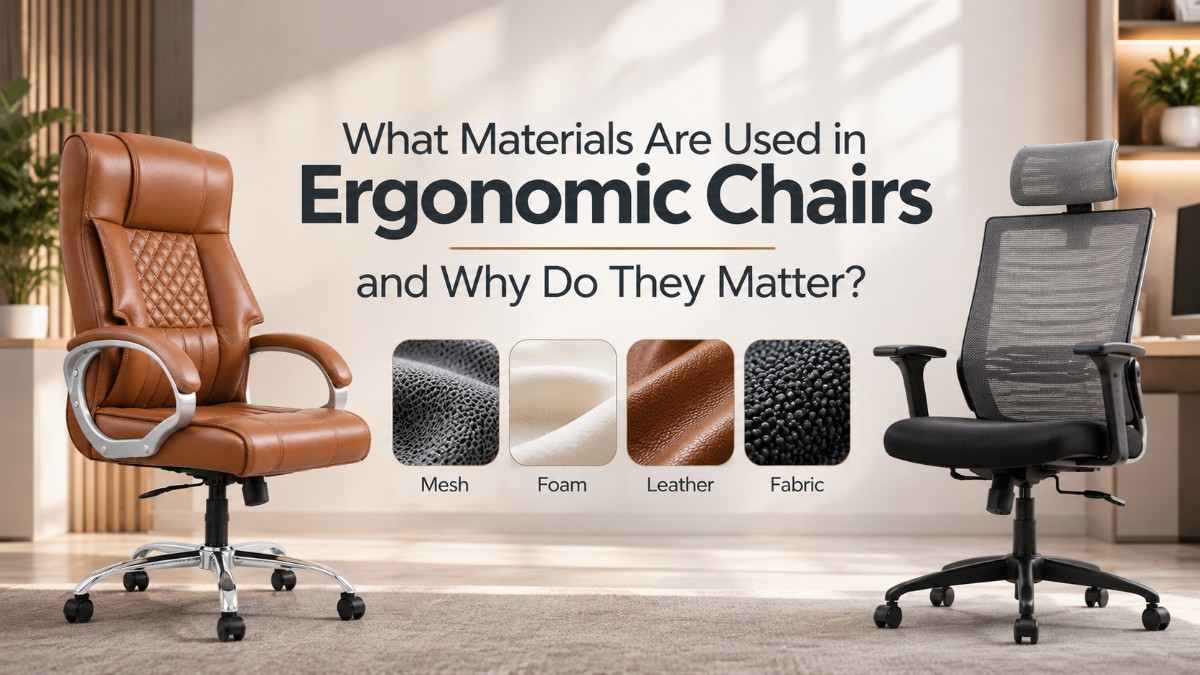
An ergonomic chair can look comfortable in a photograph, but its materials reveal more about how it will feel during a working day. The seat filling, backrest fabric, frame, and wheels all influence comfort, support, maintenance, and durability.
Understanding ergonomic chair materials helps you compare options beyond appearance. A breathable backrest may suit a warm workspace, while a padded seat may offer the cushioning you prefer. Here is how different materials affect everyday use and what to check before choosing.
Mesh: Airflow with a Firmer Feel
Mesh is commonly used for backrests and sometimes seats. Its open structure allows air to circulate, helping reduce heat buildup where your body touches the chair.
However, mesh quality varies. The weave, tension, and supporting frame determine whether it feels supportive, flexible, or overly firm.
What Should You Check?
Look for even tension and securely attached edges. When sitting, notice whether the frame presses against your thighs or back. Mesh that sags excessively may change how your weight is supported.
Mesh can collect dust within its weave, so regular vacuuming helps keep it clean.
Foam: Cushioning and Pressure Distribution
Foam gives upholstered seats their cushioning. Polyurethane foam is widely used, while some designs feature moulded foam or memory foam layers.
Density and firmness describe different properties. Density refers to how much material occupies a given volume; firmness describes how strongly the foam resists compression. A dense cushion is not necessarily hard.
Why Does Foam Quality Matter?
A cushion should support your weight without compressing so far that you feel the seat structure underneath. Very soft padding may feel welcoming initially but provide less stable support during prolonged sitting.
Memory foam responds slowly to pressure and can retain warmth. Overall comfort also depends on cushion thickness, seat shape, and the upholstery covering it.
Fabric: Texture, Warmth, and Everyday Care
Fabric upholstery includes polyester, nylon, wool blends, and other woven textiles. Its texture can make a seat feel softer and less slippery than some smooth coverings.
Breathability depends on the weave, backing, and padding beneath it. A fabric label alone does not tell you how cool the finished seat will feel.
For frequent use, consider abrasion resistance and cleaning instructions. Tightly woven fabrics may tolerate daily friction well, but spills can soak into untreated upholstery. Removable covers, where available, can make maintenance easier.
Leather and Synthetic Leather: Different Maintenance Needs
Leather offers a distinctive surface and can develop changes in appearance with use. Its performance depends on the leather grade, finish, and care.
Synthetic leather commonly uses a polyurethane or PVC surface over a backing material. These coverings are often easier to wipe than absorbent fabrics, although suitability depends on the cleaning product used.
Both options generally allow less airflow than open mesh. Synthetic coverings may peel or crack as they age, particularly when exposed to unsuitable cleaners or challenging conditions. Check care requirements and warranty exclusions before buying.
Metal and Plastic: The Supporting Structure
Frames and bases commonly use steel, aluminium, reinforced plastic, or combinations of these materials.
Steel provides strength but can add weight. Aluminium can offer a lighter structure, while reinforced plastics allow complex shapes and some flexibility.
Material names alone do not establish strength. Component thickness, joint quality, construction, and testing all matter. A metal base does not automatically make the entire chair more durable than a well-designed reinforced plastic alternative.
Check the stated weight capacity and whether relevant durability testing is documented.
Armrest Pads and Castors: Small Details That Matter
Armrest pads often use polyurethane, foam, or other resilient materials. They should cushion your forearms without feeling unstable or developing uncomfortable pressure points. Adjustment range and positioning matter as much as softness.
Castors may have hard plastic wheels or softer tread materials. Hard wheels commonly suit carpet, while softer wheels are often intended for hard flooring. Confirm compatibility with your particular floor.
The right castors help the chair move smoothly and can reduce surface wear. Keep wheels free from trapped grit and hair.
How to Choose the Right Material Combination
Start with your workspace conditions, daily sitting time, and willingness to clean different surfaces. Then assess the complete chair:
- Sit long enough to judge cushioning and heat.
- Check seams, edges, joints, and adjustment controls.
- Review cleaning guidance, replacement parts, and warranty coverage.
The best ergonomic chair materials work together with suitable dimensions and adjustments. Prioritise a combination that supports comfortable movement, fits your workspace, and remains practical to maintain over time.