Creating a comfortable shaded area can make your outdoor space more useful throughout the day. Whether you have a garden, patio, balcony, terrace, or outdoor seating area, choosing the right shade solution can improve comfort while protecting you from direct sunlight. Two common options are a pergola and an outdoor garden umbrella. While pergolas offer a permanent structure, an outdoor garden umbrella provides a more flexible and practical way to create shade where you need it.
For homeowners who want an easy-to-install, movable, and space-friendly shade solution, a garden umbrella can be a better choice. It can be positioned beside a dining table, lounge chairs, or garden seating and moved whenever required. Let us compare both options to understand which one works better for different outdoor spaces.
What Is an Outdoor Garden Umbrella?
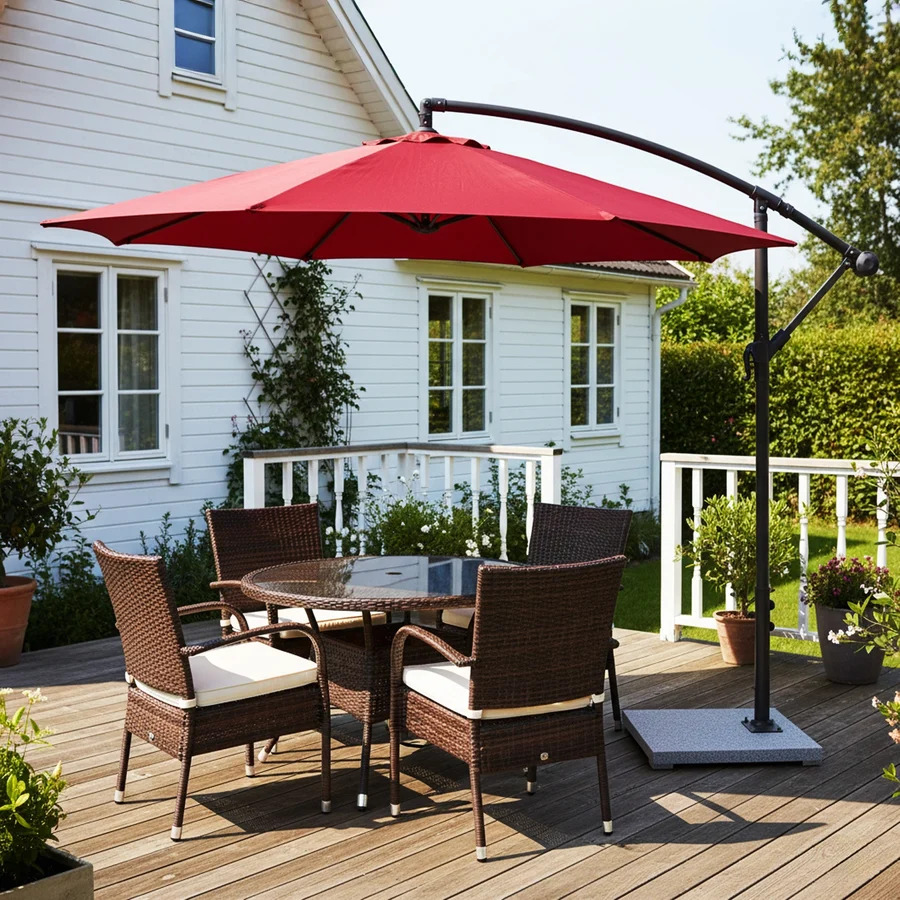
An outdoor garden umbrella is a freestanding or table-supported shade solution designed for outdoor use. It generally consists of a large canopy, central or side pole, and supporting frame. Depending on the design, some models can be tilted or rotated to adjust the shaded area according to the position of the sun.
One of the biggest advantages is flexibility. Unlike a fixed structure, an outdoor garden umbrella can be placed wherever shade is needed. It can work well with outdoor dining sets, garden chairs, lounge areas, poolside seating, and patios.
What Is a Pergola?
A pergola is a permanent or semi-permanent outdoor structure made using vertical posts and horizontal beams. Some pergolas have an open roof, while others include fabric, panels, retractable covers, or other materials for additional shade.
Pergolas can create a defined outdoor area and may be suitable for larger gardens, patios, and spacious properties. However, they generally require more planning, installation, and available space than an umbrella.
Outdoor Garden Umbrella vs Pergola: Key Differences
1. Installation
Installation is one of the biggest differences between these two shade solutions.
A pergola usually requires structural installation. Depending on its size and construction, it may need a prepared foundation, multiple support posts, and professional assembly.
An outdoor garden umbrella is considerably simpler. Once the base and pole are assembled securely, it can be positioned in the desired location. This makes it suitable for people who want shade without undertaking major outdoor construction.
2. Flexibility and Mobility
A pergola remains in one location after installation. This can be useful if you want a permanent shaded seating area, but it limits flexibility.
A garden umbrella offers much greater mobility. You can move it between different parts of the garden or patio depending on the time of day. If you rearrange your outdoor furniture, the umbrella can also be repositioned accordingly.
This flexibility makes an outdoor garden umbrella particularly useful for changing outdoor layouts.
3. Space Requirements
Pergolas generally need more space because they have multiple structural supports and create a defined footprint. They can work well in large gardens and spacious patios.
An umbrella takes up less structural space and can be placed beside existing furniture. This makes it a practical option for compact gardens, balconies, terraces, and smaller patios.
If your outdoor area has limited space, choosing an appropriately sized garden umbrella can provide shade without making the area feel crowded.
4. Cost and Overall Investment
A pergola can involve higher costs because of materials, structural components, installation, and potential maintenance requirements. The final investment depends on its size, material, design, and construction.
An outdoor garden umbrella generally requires a smaller initial investment. You can choose a size and design according to your available space and budget. Since it does not require extensive construction, it can also be a convenient option for renters or homeowners who prefer a less permanent solution.
5. Shade Coverage
Both options can provide effective shade, but their coverage works differently.
A pergola creates shade over a fixed area. Its effectiveness depends on the roof design, orientation, and whether additional shade materials are installed.
An umbrella provides concentrated shade directly underneath its canopy. Larger models can cover dining tables and multiple chairs, making them useful for outdoor meals and gatherings.
Some umbrellas also offer adjustable positioning, allowing you to direct the canopy toward areas receiving stronger sunlight.
6. Maintenance
Pergolas can require regular maintenance depending on their construction material. Wooden structures may require treatment and protection, while fabric or retractable covers may need cleaning and periodic care.
Garden umbrellas also require maintenance, but the process is generally straightforward. The canopy should be kept clean, the frame checked periodically, and the umbrella stored or protected during severe weather conditions.
Why Choose an Outdoor Garden Umbrella?
For many homeowners, the biggest advantage is convenience. You do not need to redesign the entire garden to add shade. An umbrella can be integrated with existing outdoor furniture and positioned where it provides the most useful coverage.
It is also easier to change or upgrade. If your seating arrangement changes, you can reposition the umbrella. If you move to another home, it can potentially move with you.
A garden umbrella can also complement outdoor dining tables, garden chairs, loungers, and other seating arrangements without requiring a permanent structure.
Which Option Is Better for Your Outdoor Space?
The right choice depends on your priorities. A pergola can be suitable when you want a permanent architectural feature and have enough space for structural installation.
However, if your priority is flexibility, easier installation, lower structural commitment, and adaptable shade, an outdoor garden umbrella is often the more practical choice.
For small gardens and patios, an umbrella can provide shade without taking up excessive space. For outdoor dining, it can be positioned directly over the table. For lounge areas, it can be moved closer to seating when the sun shifts.
Final Thoughts
Both pergolas and umbrellas can improve the comfort of an outdoor area, but they serve different purposes. A pergola is a more permanent investment that can define an outdoor space, while an outdoor garden umbrella provides a flexible shade solution that can adapt to changing needs.
If you want a practical way to add shade without committing to major construction, a garden umbrella is worth considering. Its mobility, space efficiency, straightforward setup, and compatibility with different outdoor furniture arrangements make it a convenient choice for gardens, patios, terraces, and outdoor dining areas.
For homeowners looking for adaptable shade with less structural commitment, an outdoor garden umbrella can be a simple and effective addition to an outdoor space.
FAQs
1. Is an outdoor garden umbrella better than a pergola for small spaces?
Yes. An outdoor garden umbrella generally works better for smaller gardens, patios, balconies, and terraces because it requires less structural space and can be positioned according to your seating arrangement.
2. Can an outdoor garden umbrella provide enough shade for outdoor dining?
Yes. A properly sized garden umbrella can provide shade over an outdoor dining table and chairs, helping reduce direct sunlight during meals and gatherings.
3. Can a garden umbrella be moved from one location to another?
Yes. One of the main benefits of a garden umbrella is its flexibility. Depending on its design and base, it can be repositioned to provide shade in different areas of your outdoor space.
4. Are garden umbrellas suitable for patios and terraces?
Yes. Garden umbrellas can be suitable for patios and terraces where permanent shade structures may not be practical. They can be placed alongside seating, dining tables, or other outdoor furniture.
5. What should I consider when choosing an outdoor garden umbrella?
Consider the canopy size, frame construction, base stability, opening mechanism, available space, and the amount of shade required. Choose a size that provides adequate coverage without restricting movement around your outdoor furniture.
6. How do I maintain an outdoor garden umbrella?
Regularly clean the canopy, check the frame and opening mechanism, and keep the umbrella securely closed during strong winds or severe weather. Proper care can help maintain its appearance and usability for longer.