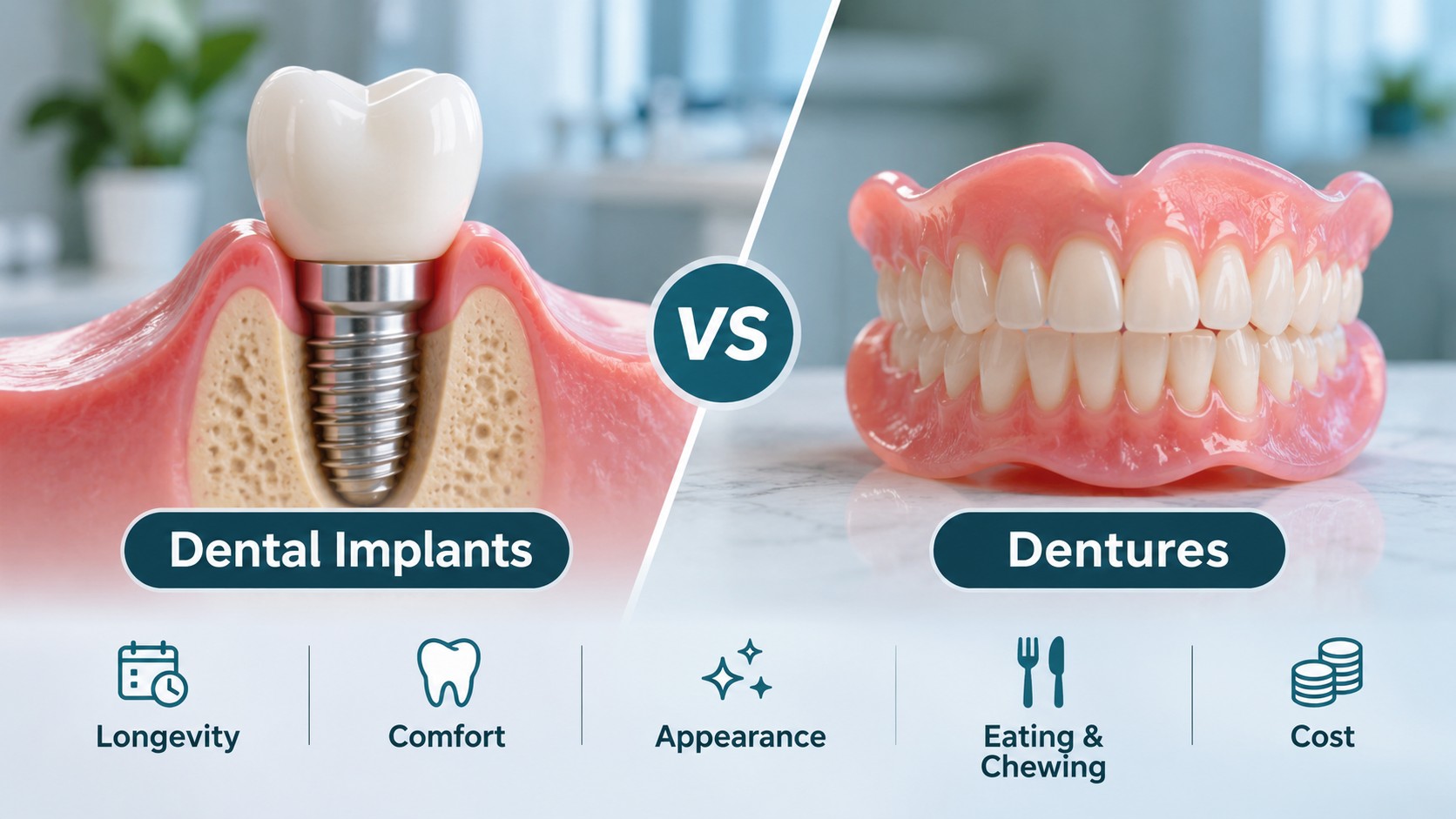
Losing one or more teeth can affect much more than your appearance. Missing teeth may make chewing difficult, change the way you speak, affect your confidence, and create challenges when eating your favorite foods. Fortunately, modern dentistry offers several tooth replacement options, with dental implants and dentures being two of the most common choices.
If you are researching dental implants in St. Charles, you may be wondering whether implants are worth the investment or whether traditional dentures are a better option. Both treatments can restore your smile, but they differ in terms of stability, comfort, maintenance, cost, and long-term performance.
The right choice depends on how many teeth you have lost, your oral health, jawbone condition, budget, lifestyle, and personal preferences. Understanding these differences can help you make a more informed decision.
At Dean Dental Studio, patients can explore restorative dental options based on their individual needs and oral health goals. This guide explains how dental implants and dentures compare so you can better understand which solution may work for you.
Understanding Dental Implants and Dentures
Before comparing the two options, it is important to understand how each tooth replacement treatment works.
What Are Dental Implants?
Dental implants are artificial tooth roots, usually made from biocompatible titanium, that are surgically placed into the jawbone. Over time, the implant integrates with the surrounding bone through a process called osseointegration.
Once the implant has healed sufficiently, a custom-made dental crown, bridge, or denture can be attached to restore the missing teeth.
Dental implants are designed to provide a stable foundation for replacement teeth. Unlike traditional removable dentures, implants are anchored in the jawbone.
Common types of dental implant restorations include:
Single-tooth implants: Replace one missing tooth with an implant-supported crown.
Multiple dental implants: Replace several missing teeth using implant-supported bridges.
Full-arch implant restorations: Replace an entire upper or lower arch of teeth using strategically placed implants.
Implant-supported dentures: Removable or fixed dentures that attach to dental implants for improved stability.
For patients considering dental implants in St. Charles, a dental evaluation helps determine which restoration is appropriate.
What Are Dentures?
Dentures are removable dental appliances designed to replace missing teeth and surrounding gum tissue when necessary. They are generally made using artificial teeth attached to an acrylic or other suitable base.
Dentures are available in different forms depending on how many teeth need replacement.
Full dentures: Replace all teeth in the upper or lower arch.
Partial dentures: Replace several missing teeth while using remaining natural teeth for support.
Immediate dentures: Are placed shortly after tooth extraction, although adjustments or replacement may be needed as the gums heal.
Traditional dentures rest on the gums and may use clasps, suction, or adhesive products to remain in position.
They are generally less invasive than dental implant surgery and may be suitable for people who cannot undergo implant treatment or prefer a removable option.
Dental Implants vs. Dentures: Key Differences
Both treatments can restore missing teeth, but they offer different experiences.
Here are the major factors to consider when comparing dental implants and traditional dentures.
1. Stability and Security
Stability is one of the biggest differences between dental implants and dentures.
Dental implants are anchored directly into the jawbone. Once properly integrated and restored, they provide a secure foundation for replacement teeth. This means patients generally do not need to worry about their implant-supported teeth shifting during normal eating or speaking.
Traditional dentures rely on the shape of the gums and underlying jawbone for support. Some dentures may move while talking, laughing, or chewing, particularly when the fit changes over time.
For example, someone who regularly eats foods that require more chewing may prefer the stability of implant-supported teeth.
Better option for stability: Dental implants generally provide greater stability than traditional removable dentures.
2. Comfort and Everyday Use
Comfort depends on the quality of the restoration, oral anatomy, and how well the treatment is planned.
Dental implants function more like natural teeth because they are supported by the jawbone. Once healing is complete, many patients find them comfortable for everyday activities.
Dentures can also provide good comfort when properly fitted. However, some people experience sore spots, gum irritation, pressure, or difficulty adjusting to wearing an appliance.
Dentures may also require periodic relining or adjustments as the gums and jawbone change.
If comfort and a more natural-feeling replacement are important priorities, dental implants may be worth considering.
3. Appearance and Natural Look
Both dental implants and dentures can improve the appearance of your smile.
Dental implant crowns are custom-designed to match the shape, size, and color of surrounding teeth. This allows them to blend naturally with the existing smile.
Modern dentures can also be customized to complement facial features and provide a natural-looking appearance.
However, traditional dentures may become loose as the jawbone changes, potentially affecting facial support and appearance.
Implants help preserve the jawbone around the implant site, which may help maintain the supporting structure in that area. They do not completely prevent natural bone loss throughout the jaw.
Important consideration: The final appearance of either option depends on proper planning, materials, and professional fitting.
4. Chewing Ability and Food Choices
Missing teeth can make eating certain foods difficult. Even after getting replacement teeth, chewing ability may vary depending on the treatment.
Dental implants provide a stable foundation that allows many patients to eat a wide variety of foods comfortably after healing and restoration.
Traditional dentures can restore chewing function, but they may not provide the same biting efficiency as natural teeth or fixed implant-supported restorations.
Patients wearing removable dentures may need to avoid particularly hard, sticky, or chewy foods, especially if their dentures shift during meals.
For someone who enjoys foods such as apples, nuts, raw vegetables, or tougher meats, implant-supported restorations may offer greater convenience.
However, patients should follow their dentist's instructions about diet during healing and after treatment.
5. Jawbone Health
Jawbone health is an important factor when choosing between dental implants and dentures.
Natural tooth roots stimulate the jawbone during chewing. When a tooth is lost, the bone in that area no longer receives the same stimulation, which can contribute to gradual bone loss.
Dental implants act as artificial tooth roots and transmit chewing forces to the surrounding bone. This helps maintain bone around the implant.
Traditional dentures rest on the gums and do not provide the same stimulation to the jawbone. Over time, changes in the jawbone can affect denture fit.
This is one reason some denture wearers need periodic adjustments or replacement dentures.
If you have been missing teeth for several years, a dental evaluation can help determine whether sufficient bone is available for implants or whether additional procedures may be necessary.
6. Maintenance and Oral Hygiene
Both dental implants and dentures require consistent care.
Dental implants should be brushed and cleaned like natural teeth. Patients also need to clean between teeth and around implant restorations using appropriate dental tools.
Regular professional dental checkups are important to monitor the condition of the implants, gums, and supporting structures.
Traditional dentures require a different cleaning routine. They generally need to be removed for cleaning and may need to be soaked in an appropriate denture-cleaning solution.
Patients should also clean their gums, tongue, and any remaining natural teeth.
Maintenance comparison:
Dental implants require daily brushing, interdental cleaning, and regular professional examinations.
Removable dentures require daily cleaning, careful handling, and appropriate overnight storage according to dental instructions.
Both options require ongoing attention to oral hygiene.
Both may need professional adjustments or maintenance over time.
7. Treatment Time and Recovery
Treatment timelines are another important consideration.
Dental implant treatment generally takes longer because it involves surgical placement and a healing period.
The typical process may include:
Initial dental examination and imaging.
Assessment of jawbone condition and gum health.
Implant placement surgery.
Healing and integration of the implant with the bone.
Placement of the final crown, bridge, or denture.
The overall timeline can vary from a few months to longer, depending on bone health, healing, additional procedures, and treatment complexity.
Traditional dentures can often be made and fitted more quickly. However, immediate dentures may need adjustments as the gums heal and change shape following tooth extraction.
If you need a quicker tooth replacement solution, dentures may be more convenient initially. If you are comfortable with a longer treatment process, dental implants may offer advantages over time.
Dental Implants vs. Dentures: Which Is More Affordable?
Cost is one of the most important factors when comparing tooth replacement options.
Traditional dentures generally have a lower initial cost than dental implants. They may be a practical option for patients who need to replace several or all missing teeth while managing a limited budget.
Dental implants usually involve a higher initial investment because treatment includes surgical placement, implant components, custom restorations, and potentially additional procedures.
However, comparing only the initial price may not provide a complete picture.
Dentures may require:
Periodic relining to maintain a proper fit.
Repairs if the appliance cracks or breaks.
Replacement when wear or changes in the jaw affect fit.
Denture adhesives and cleaning products.
Dental implants may involve:
Initial consultation and diagnostic imaging.
Surgical placement and implant components.
Abutments and custom crowns or bridges.
Follow-up appointments and ongoing maintenance.
Additional procedures such as bone grafting when clinically necessary.
The actual cost of dental implants in St. Charles depends on several factors, including:
Number of missing teeth.
Type and number of implants required.
Whether bone grafting is necessary.
Type of final restoration.
Complexity of the treatment.
Insurance coverage and available payment arrangements.
When comparing estimates, ask for an itemized treatment plan. This helps you understand what is included rather than comparing incomplete prices.
You should also ask whether your dental insurance provides benefits for implants, dentures, extractions, or related procedures. Coverage varies by plan.
Who Is a Good Candidate for Dental Implants?
Dental implants can be an excellent tooth replacement option, but they are not suitable for everyone.
A dental professional will evaluate your oral health, medical history, jawbone condition, and treatment expectations before recommending implants.
You may be a suitable candidate if:
You have one or more missing teeth.
Your gums are healthy or any gum disease has been treated.
You have sufficient jawbone to support the implants.
You maintain good oral hygiene.
You are willing to follow post-surgical instructions and attend follow-up appointments.
Certain factors may affect implant eligibility, including uncontrolled diabetes, active gum disease, smoking, some medications, and medical conditions that interfere with healing.
These factors do not automatically rule out implant treatment, but they may require additional evaluation or planning.
Can You Get Dental Implants If You Have Bone Loss?
Yes, some patients with bone loss may still qualify for dental implants.
If the jawbone does not have enough volume to support an implant, a dentist may recommend bone grafting or another procedure to improve the implant site.
The appropriate approach depends on the amount and location of bone loss.
A clinical examination and appropriate imaging are necessary to determine whether implant placement is possible.
When Are Dentures a Better Choice?
Although dental implants offer several long-term advantages, dentures remain a practical and effective treatment for many patients.
Dentures may be a better option if:
You want a lower initial treatment cost.
You need to replace many or all missing teeth.
You are not medically suitable for implant surgery.
You have insufficient jawbone and do not want additional surgical procedures.
You prefer a removable tooth replacement.
You need a temporary replacement while planning future treatment.
For example, an older patient with multiple missing teeth who prefers to avoid surgery may find traditional dentures more appropriate.
The goal is not to choose the most advanced treatment but to select a solution that fits your oral health, budget, and lifestyle.
Are Implant-Supported Dentures a Better Alternative?
If you are unsure whether traditional dentures or individual dental implants are right for you, implant-supported dentures may offer another option.
This treatment combines dental implants with a denture restoration.
Instead of resting entirely on the gums, the denture attaches to implants placed in the jawbone.
Potential benefits include:
Improved stability compared with conventional removable dentures.
Better retention during speaking and eating.
Reduced movement during everyday activities.
Support for the jawbone around implant sites.
Greater confidence for some denture wearers.
Depending on the design, implant-supported dentures may be removable by the patient or fixed in place and removed only by a dental professional.
Your dentist can explain which design is appropriate based on the number of implants needed, bone condition, and oral health.
Common Mistakes to Avoid When Choosing Between Dental Implants and Dentures
Choosing a tooth replacement option without understanding the long-term implications can lead to unnecessary expenses or dissatisfaction.
Here are some common mistakes to avoid.
Choosing Based Only on Initial Cost
A lower upfront price does not always mean lower overall expenses.
Consider the expected maintenance, replacement needs, and long-term treatment requirements of each option.
Ignoring Jawbone Health
Jawbone changes can affect both implant eligibility and denture fit.
If you have missing teeth, getting an oral examination sooner can help you understand your options before additional changes occur.
Delaying Treatment for Too Long
Leaving missing teeth untreated may contribute to shifting of nearby teeth, bite changes, chewing difficulties, and bone loss.
A timely dental consultation can help prevent avoidable complications.
Not Asking About All Available Options
Some patients assume they must choose between traditional dentures and individual implants.
Depending on their needs, partial dentures, implant-supported bridges, or full-arch implant restorations may also be suitable.
Overlooking Long-Term Maintenance
Every tooth replacement option requires care.
Before deciding, ask your dentist about cleaning routines, follow-up visits, repairs, and expected maintenance costs.
How to Choose the Right Tooth Replacement Option in St. Charles
If you are comparing dental implants and dentures, consider the following factors before making a decision.
1. Number of missing teeth: Replacing one tooth may require a different treatment approach than replacing an entire arch.
2. Jawbone condition: Your bone health can influence whether implants are suitable and whether additional procedures are needed.
3. Budget: Compare the complete treatment costs, including follow-up care and potential future maintenance.
4. Lifestyle: Consider your eating habits, daily routine, comfort preferences, and willingness to maintain removable dentures.
5. Long-term goals: Think about whether you prefer a removable solution or a more permanent, implant-supported restoration.
6. Professional evaluation: A personalized dental assessment is essential before choosing any tooth replacement procedure.
At Dean Dental Studio, patients exploring restorative dental care can discuss their concerns and treatment goals to understand which options may be appropriate for their needs.
If you are searching for dental implants in St. Charles, scheduling a consultation is a useful first step toward understanding your available treatment choices.
Frequently Asked Questions
1. Are dental implants better than dentures?
Dental implants generally provide better stability, chewing efficiency, and support for the jawbone around implant sites. However, dentures may be more affordable initially and are suitable for patients who prefer a removable option or cannot undergo implant surgery. The better choice depends on individual needs.
2. How long do dental implants last compared with dentures?
Dental implants can last many years, and some may last a lifetime with proper care. However, the attached crowns or other restorations may need replacement due to normal wear. Dentures often need adjustments, relining, or replacement as the mouth changes. Neither option has a guaranteed lifespan.
3. Are dental implants more expensive than dentures?
Yes, dental implants generally have a higher initial cost because they involve surgery, implant components, and custom restorations. Dentures typically cost less initially. However, long-term maintenance and replacement expenses should also be considered.
4. Can I switch from dentures to dental implants later?
Yes, many denture wearers can transition to dental implants. However, eligibility depends on jawbone condition, gum health, and overall health. Some patients may require bone grafting before implant placement.
5. Do dental implants feel like natural teeth?
Dental implants are designed to function similarly to natural teeth. Once healing is complete, many patients find them comfortable and stable during everyday activities. However, they do not have the same natural sensation as teeth because they lack the original tooth's nerve and periodontal ligament.
6. Can I eat normally with dentures?
Dentures restore chewing ability, but adjusting to them may take time. Some patients find certain hard, sticky, or chewy foods difficult to eat. Proper fitting and gradual adaptation can improve comfort and function.
7. Are dental implants suitable for older adults?
Age alone does not determine whether someone can receive dental implants. Overall health, bone quality, gum condition, and the ability to heal are more important factors. A dental professional can assess suitability.
8. Where can I learn more about dental implants in St. Charles?
You can schedule a consultation with Dean Dental Studio to discuss missing teeth, available restorative options, treatment considerations, and whether dental implants may be suitable for your oral health needs.
Conclusion: Choosing Between Dental Implants and Dentures
Both dental implants and dentures can restore missing teeth, improve smile appearance, and support everyday oral function. However, they serve different needs.
Dental implants generally offer better stability, help maintain bone around implant sites, and provide a tooth replacement solution that does not need to be removed for daily cleaning. Traditional dentures offer a more affordable initial option, avoid implant surgery, and can replace multiple missing teeth.
The right decision depends on your oral health, jawbone condition, budget, lifestyle, and long-term expectations.
If you are considering dental implants in St. Charles, Dean Dental Studio can help you explore restorative dental options and understand the factors involved in choosing an appropriate treatment. Schedule a dental consultation to discuss your concerns and take the next step toward restoring your smile.