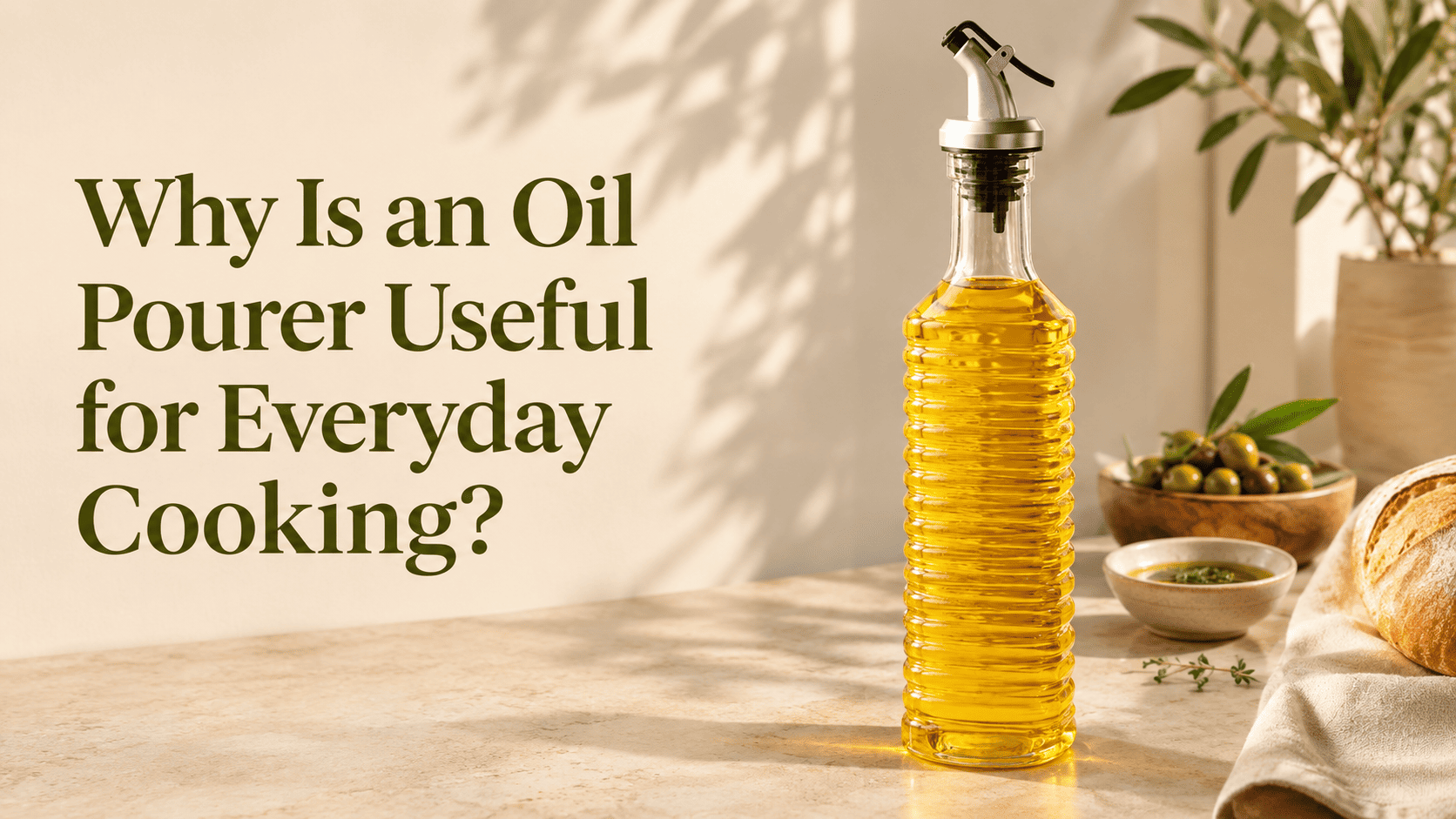
Cooking often begins with a small action: adding oil to a pan. Yet that simple step can become messy when a heavy bottle releases more than you intended. A sudden splash can leave your vegetables swimming, your countertop greasy, or your recipe harder to balance.
An oil pourer makes this everyday task easier by giving you a more manageable way to dispense cooking oil. Whether you are preparing breakfast, tossing a salad, or cooking dinner, controlled pouring can make the process smoother and cleaner.
Better Control Over the Amount You Add
Large bottles are useful for buying and storing oil, but they are not always comfortable to handle over a hot pan. Their wide openings can release a generous amount before you have time to adjust your hand.
Using an oil pourer helps you add a thinner, more directed stream. This is particularly useful when greasing a frying pan, coating sliced vegetables, or adding a finishing drizzle to a prepared dish.
Better control also lets you start with a little and add more only when needed. However, a pouring spout does not measure quantities accurately. For recipes requiring a specific amount, use a measuring spoon or cup.
Less Mess Around the Cooking Area
Oil running down the side of a bottle can leave sticky rings on shelves and slippery patches near the stove. Repeated wiping becomes another small chore during an already busy cooking session.
A well-designed oil pourer can help reduce drips, especially when its spout directs the stream cleanly and stops neatly as you tilt the container upright. Results depend on the design, so check how the spout performs rather than relying only on appearance.
These simple habits help keep cupboard shelves cleaner and make the container more pleasant to pick up again.
Keep a small tray underneath the container and wipe the neck when necessary. Even a useful dispenser still needs occasional cleaning.
Easier Handling During Meal Preparation
A manageable container can feel more comfortable than repeatedly lifting a large refill bottle. That difference becomes noticeable when you are preparing several dishes or adding small amounts at different stages.
An oil pourer with a secure grip and balanced shape makes it easier to aim where the oil should go. Look for a size that feels comfortable when filled, since a container that seems light when empty may become awkward in use.
Always keep your hands dry and avoid reaching across hot cookware. Position frequently used ingredients within comfortable reach before cooking begins.
Useful Beyond the Frying Pan
Controlled pouring is helpful for more than sautéing onions or preparing a quick omelette. You can drizzle oil over roasted vegetables, lightly coat a baking tray, or distribute it across ingredients before mixing.
An oil pourer is also handy when making salad dressings. Adding oil gradually while whisking helps you combine it with the other ingredients, although the recipe and mixing method still determine the final texture.
For brushing bread or greasing cookware, pour a little into a separate bowl first. This keeps the dispenser away from crumbs, wet utensils, and food residue.
Choosing a Practical Design
The best oil pourer for your kitchen should be easy to handle, refill, and clean. A stylish shape is useful only if the everyday details work well.
Check the Opening and Spout
A wider filling opening can simplify refilling and cleaning. A removable spout helps you reach areas where residue may collect. Check that the closure fits securely and that the container is intended for food use.
Consider Storage and Capacity
Choose a capacity that suits how quickly you use the contents. Store oil away from heat and direct light, following any instructions on its original packaging. Avoid leaving it beside a hot burner simply because that spot is convenient.
Simple Habits That Keep It Useful
Wash the container according to its care instructions, rinse it thoroughly, and allow every component to dry completely before refilling. Clean around the spout regularly, where oil can accumulate unnoticed.
Avoid continually adding fresh oil over old residue. Empty and clean the container periodically, and keep track of the oil type and its original date information. If you use different cooking oils, clear labels make them easier to identify.
An oil pourer earns its place through small, practical improvements: easier handling, controlled drizzling, and fewer messy interruptions. Choose a functional design and care for it properly, and adding oil becomes a simpler part of your daily cooking routine.