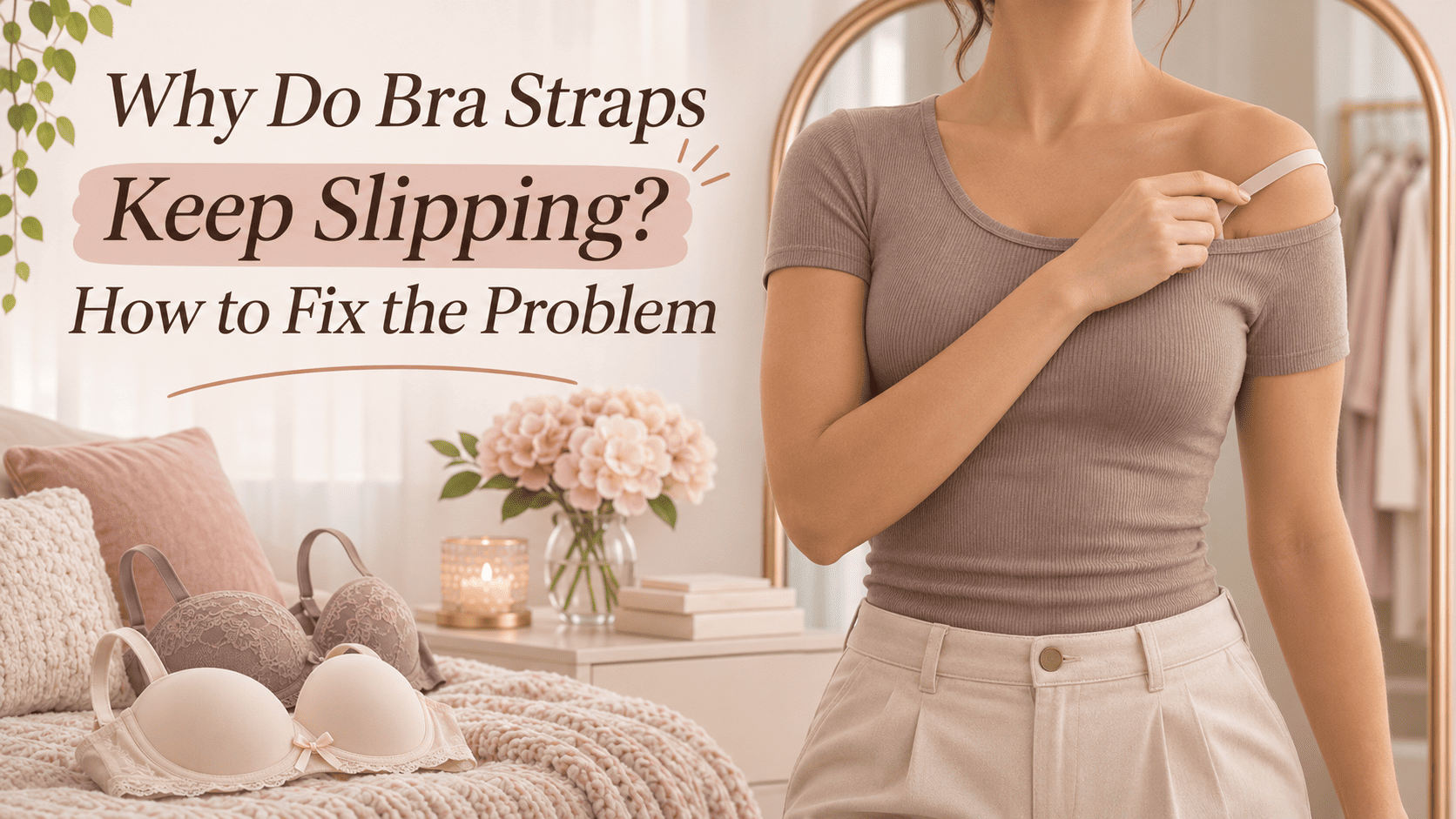
You're getting ready for the day, everything looks perfect, and suddenly, one bra strap slides off your shoulder. You pull it back into place, only for it to slip again minutes later. Sound familiar?
Slipping bra straps are a common lingerie problem that can make everyday activities uncomfortable. Whether you're working, travelling, or exercising, constantly adjusting your straps can become frustrating.
The good news is that this problem usually has a simple explanation. Understanding what causes strap slippage can help you choose the right bra for women and enjoy better comfort throughout the day.
Why Do Bra Straps Keep Falling Off?
Bra straps can slip for several reasons, including incorrect sizing, loose elastic, unsuitable strap placement, and natural shoulder shape.
1. Your Bra Band Is Too Loose
The band provides most of a bra's support. When it is too loose, it may ride up or move around your body, affecting how the straps sit.
A properly fitted bra for women should have a firm but comfortable band that stays level around the ribcage.
If your band moves upwards when you raise your arms, consider trying a smaller band size while adjusting the cup size accordingly.
2. Your Shoulder Straps Are Too Loose
Loose straps are one of the most obvious causes of slipping.
Over time, adjustable straps can gradually loosen through regular wear and washing. They may also shift during movement.
However, tightening them excessively is not the solution. Straps should rest securely on your shoulders without digging into your skin.
3. Your Natural Shoulder Shape Affects Strap Placement
Everyone has a different shoulder structure. People with narrow or sloping shoulders may experience more frequent strap slipping.
Traditional wide-set straps can slide towards the outer edges of the shoulders, especially during movement.
Choosing a bra for women with centrally positioned straps, convertible straps, or a racerback design may help prevent this issue.
4. The Bra Has Lost Its Elasticity
Even high-quality lingerie gradually loses elasticity with frequent wear and washing.
When the elastic stretches permanently, the straps may stop holding their original position.
If you repeatedly tighten your straps but they continue slipping, inspect the elastic and adjusters for wear.
5. The Cup Size or Shape Is Incorrect
Bra cups also influence strap placement.
Cups that are too large or poorly matched to your breast shape may not sit securely against the body. Similarly, unsuitable cup construction can affect the overall fit.
Finding the right bra for women involves checking the band, cups, straps, and breast shape together rather than focusing on a single measurement.
How to Stop Bra Straps from Slipping
1. Adjust Both Straps Correctly
Start by checking the length of your shoulder straps.
Shorten each strap gradually until it sits comfortably without falling or creating pressure.
Because many people have slight differences in shoulder height or breast size, both straps do not necessarily require identical adjustments.
2. Check Your Band Size
Stand sideways in front of a mirror and examine the bra band.
It should remain approximately horizontal across your back instead of riding upwards.
If the band feels loose even on a tighter hook, you may need a different size.
A well-fitted bra for women should provide support mainly through the band, allowing the straps to stabilise the cups without carrying excessive weight.
3. Try Racerback or Convertible Straps
Racerback designs position the straps closer to the centre of your back, reducing the likelihood of slipping off your shoulders.
Convertible styles allow you to change the strap arrangement depending on your outfit and comfort preferences.
A compatible racerback clip can also bring conventional straps closer together, although it should not create uncomfortable tension.
4. Choose the Right Strap Placement
When shopping, notice where the straps connect to the cups.
Wide-set straps may work well for broader shoulders but can be less secure on narrow or sloping shoulders.
For everyday use, selecting a bra for women with appropriately positioned straps can improve stability during regular movement.
5. Replace Stretched-Out Bras
Sometimes, adjustments simply aren't enough.
If your bra has damaged elastic, slipping adjusters, or a stretched band, replacing it may be the most practical solution.
Follow the garment's washing instructions, avoid unnecessary heat exposure, and allow it to dry completely before storage.
When Should You Consider a Professional Bra Fitting?
If your straps continue slipping despite adjustments, consider getting professionally fitted.
A fitting can help identify problems with band size, cup volume, strap placement, and overall construction.
Remember that bra sizes can vary between manufacturers. Always assess comfort and movement rather than relying exclusively on the size label.
Final Thoughts
Slipping bra straps may seem like a minor inconvenience, but they often indicate a fitting issue worth addressing. Correct strap adjustments, a supportive band, suitable cup construction, and appropriate shoulder-strap placement can make everyday wear much more comfortable.
Instead of constantly pulling your straps back into place, focus on finding a bra for women that fits your body naturally.
The right fit should allow you to move confidently throughout the day without unnecessary adjustments or discomfort.