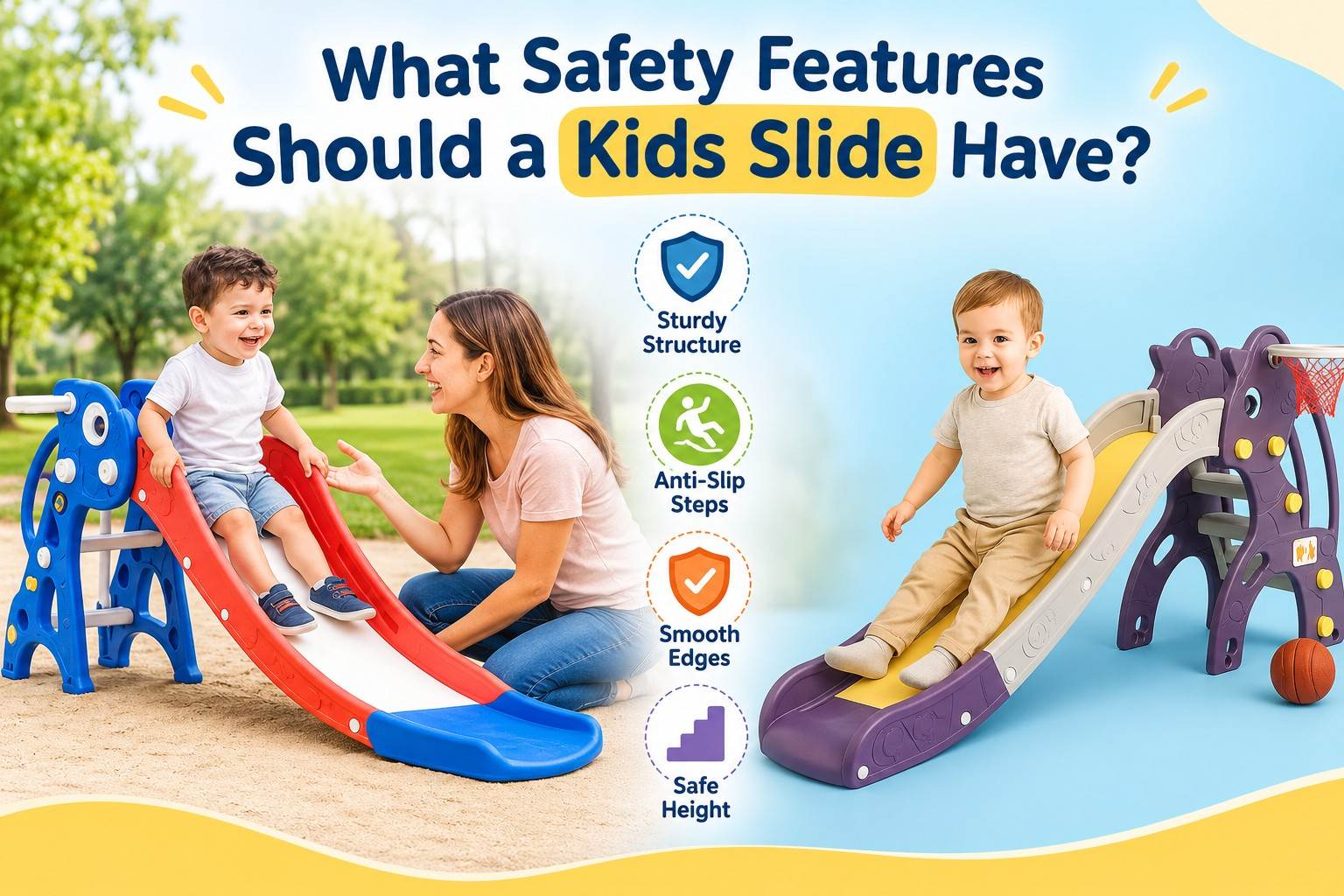
A slide can turn an ordinary play area into an exciting space where children can climb, move, and enjoy active play. However, choosing one involves more than looking at its colours, shape, or appearance. Parents should pay attention to its construction, stability, surface, climbing access, and age suitability to create a safer play experience. A well-designed kids slide should allow children to enjoy sliding while reducing the risk of common playground injuries. Understanding the essential safety features can help parents make a more informed choice for their home or outdoor play area.
1. A Stable and Sturdy Structure
Stability is one of the most important features to examine before selecting a slide. A structure that wobbles, shifts, or tips during use can increase the possibility of falls. Check whether the base provides adequate support and whether the slide remains firmly positioned on the floor or ground.
The overall construction should feel sturdy enough for regular play. If the model has multiple components, inspect how securely they connect. Follow the manufacturer's assembly instructions and check that all joints and fasteners are properly fitted before allowing children to use it.
2. Smooth Edges and Child-Friendly Surfaces
Children frequently touch different parts of playground equipment while climbing and playing. Sharp corners, rough patches, exposed screws, or uneven joints can cause scratches and other injuries.
A kids slide should have smooth surfaces and rounded edges wherever possible. The sliding area should also be free from cracks, projections, and rough sections that could catch clothing or irritate the skin.
Run a visual and physical check along accessible areas before use. If you notice damaged edges or loose components, stop using the equipment until the issue has been addressed.
3. Secure Steps and Easy Climbing Access
The climbing section deserves as much attention as the sliding surface. Children need a stable way to reach the top without slipping or losing their balance.
Look for steps that provide sufficient space for children's feet and a design that makes climbing manageable for the intended age group. Handholds or suitable side supports can offer additional assistance while children move upwards.
The steps should not feel loose or unstable. Parents should also check that the climbing area is free from obstacles and that children can move between the steps and the platform without difficulty.
4. Proper Side Rails and Protective Barriers
Side rails help children maintain their position while climbing and sitting at the top. They can also reduce the chance of accidentally stepping or falling off the sides of elevated sections.
A kids slide should have appropriately designed side barriers around the platform and climbing area. Their height and shape should suit the intended age group and the overall structure.
Check that the barriers are securely attached and do not have openings that could trap a child's head, hands, or feet. The top platform should provide enough room for children to position themselves before sliding down.
5. A Smooth and Well-Designed Sliding Surface
The sliding surface should allow children to move down comfortably without encountering unexpected obstructions. Look for a continuous, smooth design without sharp joints, cracks, or raised sections.
The slope should be appropriate for the recommended age group. A slide that is too steep or too high for a young child may make the activity difficult to manage.
Some designs also include features such as UV protection, weather resistance, and fade resistance. These qualities can help the equipment withstand regular use and outdoor exposure. However, they should complement essential structural safety features rather than replace them.
6. Age-Appropriate Height and Design
Not every slide is suitable for every child. Younger children may need a lower structure with manageable steps and a shorter sliding surface, while older children may be ready for larger designs.
Before purchasing, check the recommended age range and product dimensions. The child's physical abilities, confidence, and coordination should also be considered.
A kids slide should offer an enjoyable challenge without requiring children to attempt movements beyond their current abilities. Avoid choosing a larger model simply because it may seem useful for longer. Suitability is more important than size.
7. Safe Landing and Surrounding Space
The area around a slide plays an important role in overall safety. Children need sufficient space to reach the bottom, move away from the exit, and avoid colliding with other people or objects.
Place the equipment on a level, stable surface and keep the landing area clear. Avoid positioning it close to walls, furniture, sharp objects, or other playground equipment.
For outdoor installations, consider an appropriate impact-absorbing surface based on the equipment's height and the manufacturer's guidance. Indoors, ensure there is enough room for climbing, sliding, and getting off safely.
8. Weather-Resistant Materials and Regular Maintenance
Material quality affects how playground equipment performs over time. Plastic slides made with suitable materials can be practical for both indoor and outdoor play, depending on their design and specifications.
For outdoor use, UV resistance and weather resistance can help reduce the effects of prolonged sun exposure. Certain materials, such as LLDPE, are designed for outdoor applications, while HDPE is commonly used in smaller and indoor play setups.
Inspect the equipment regularly for cracks, fading, loose fasteners, or damaged sections. Clean it with water and a soft cloth, avoiding harsh chemicals and abrasive cleaners. A kids slide that is maintained properly is easier to keep in good playing condition.
Conclusion
Choosing a safe slide means looking beyond its appearance and considering every part of its design. Stability, smooth edges, secure steps, protective side rails, suitable height, and a clear landing area all contribute to a better play experience. Parents should also check material quality, age recommendations, and maintenance requirements before making a decision. With careful selection, correct installation, and regular supervision, a kids slide can offer children an enjoyable way to stay active, develop coordination, and explore independent play.