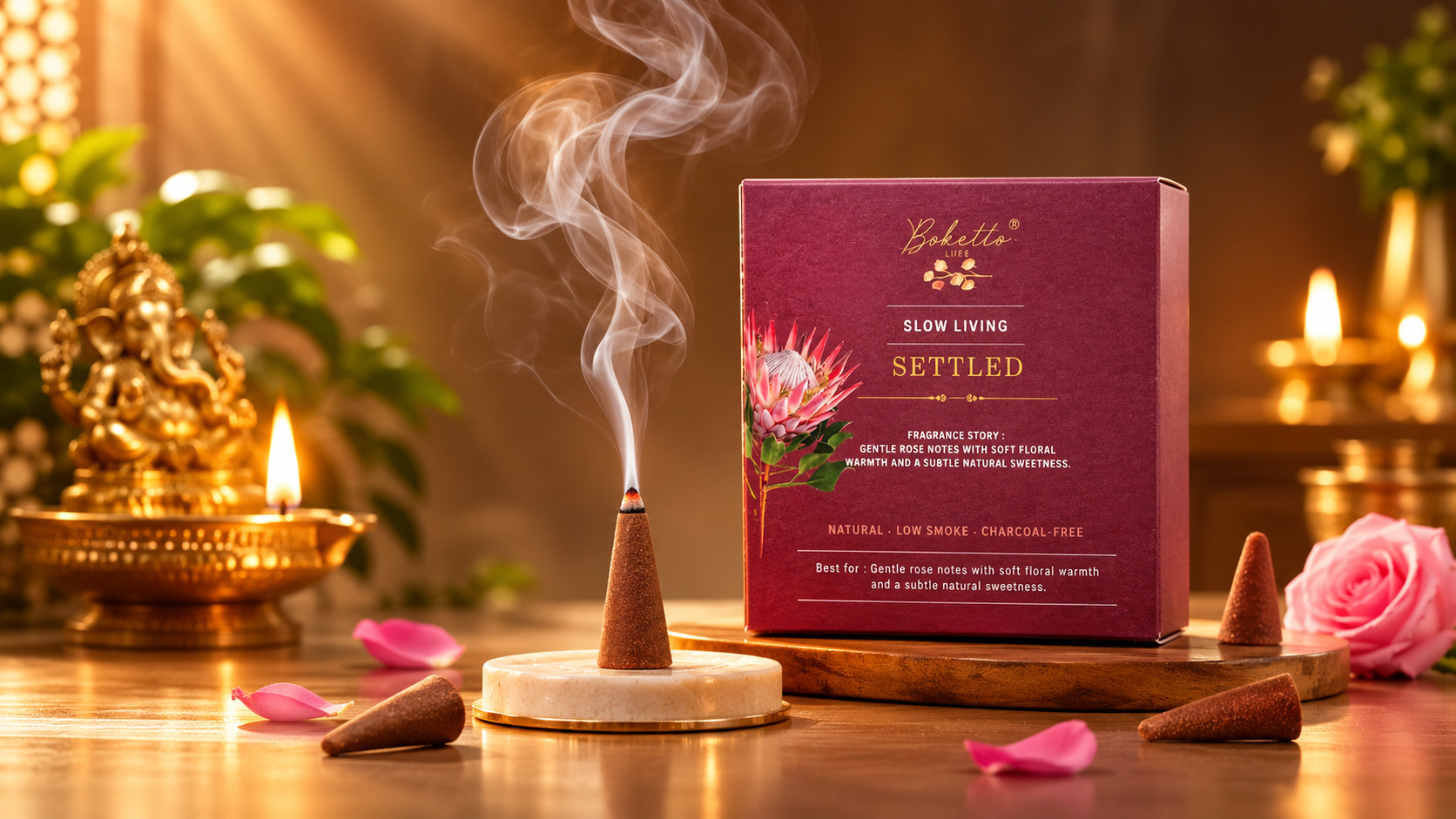
Fragrance has been a part of Indian household traditions for generations. From morning prayers and evening rituals to meditation and festive celebrations, aromatic products are commonly used to create a pleasant atmosphere at home. Among these products, dhoop cones have a familiar place in many Indian households.
Their use is often connected with traditional practices such as Ayurveda and Vastu Shastra. While Ayurveda provides a traditional perspective on herbs and aromatic substances, Vastu Shastra focuses on the arrangement and atmosphere of living spaces. Both traditions offer cultural insights into the use of fragrance, although their beliefs should not be confused with scientifically proven health benefits.
So, what is the role of dhoop cones in Ayurveda and Vastu Shastra? Understanding their traditional uses can help you make informed choices about incorporating them into your daily routine.
What Are Dhoop Cones?
Dhoop cones are small, cone-shaped aromatic products that release fragrance when lit. They are generally made using a mixture of aromatic ingredients, which may include herbs, resins, wood powders, and other fragrance materials. The exact composition varies by manufacturer and product.
Unlike traditional incense sticks, dhoop cones have a compact, cone-shaped form and are usually placed on a heat-resistant holder while burning.
They are commonly used for:
Daily puja and religious rituals.
Morning and evening prayers.
Meditation and quiet personal routines.
Traditional home-fragrance practices.
Festivals and special occasions.
Their fragrance and compact shape make them a popular option for people who prefer cone-shaped incense products.
How Are Dhoop Cones Connected to Ayurveda?
Ayurveda is a traditional Indian system of knowledge that discusses lifestyle, diet, herbs, and various approaches to well-being. Aromatic herbs and natural substances have appeared in different traditional practices over time.
Dhoop and other aromatic preparations are sometimes associated with these traditions because of their use of fragrant plant-based materials.
However, it is important to understand that burning a dhoop cone is not an Ayurvedic treatment. Its fragrance should not be considered a cure or a proven method of treating physical or mental health conditions.
1. Traditional Use of Aromatic Ingredients
Some dhoop products contain aromatic materials such as herbs, resins, and wood-based ingredients. These materials have different fragrance characteristics and traditional associations.
The ingredients used in a particular cone depend on its formulation. Therefore, check the product label instead of assuming that every dhoop cone contains the same herbs or natural materials.
2. Creating a Relaxing Environment
Fragrance can influence how people experience a space. Some individuals enjoy lighting incense during quiet activities such as reading, prayer, or meditation.
In traditional household routines, dhoop may be used to create an atmosphere associated with calmness and reflection. However, individual fragrance preferences differ, and the smoke produced by burning incense may irritate some people.
3. Supporting Traditional Daily Rituals
Aromatic products are often included in morning and evening household rituals. Lighting a dhoop cone can become part of a familiar routine involving prayer, meditation, or personal reflection.
Its role is primarily traditional and atmospheric rather than medicinal.
What Is the Role of Dhoop Cones in Vastu Shastra?
Vastu Shastra is a traditional Indian system that discusses the arrangement and use of spaces in relation to concepts such as direction, balance, and harmony.
In some Vastu practices, fragrance and incense are used as part of household rituals. Lighting dhoop is traditionally associated with creating a pleasant and welcoming atmosphere.
Here are some common ways dhoop cones are incorporated into these practices.
1. Creating a Pleasant Home Atmosphere
Fragrance is often considered an element of the overall home environment. Some households light dhoop during their morning routine or before welcoming guests.
From a practical perspective, choosing a fragrance you enjoy can make a room feel more welcoming. Keep the space ventilated while using incense.
2. Use During Puja and Prayer
Many families include dhoop in their daily worship practices. It may be lit near a prayer area as part of a puja or other religious ceremony.
The exact method and timing can vary according to regional customs, family traditions, and personal beliefs.
3. Traditional Beliefs About Positive Energy
Certain Vastu traditions associate incense and pleasant fragrances with a positive home environment. Lighting dhoop may form part of rituals intended to encourage harmony and a welcoming atmosphere.
These are traditional beliefs rather than scientifically established effects. Dhoop should not be treated as a substitute for practical measures that make a home comfortable, clean, and safe.
Dhoop Cones vs Dhoop Sticks: What Is the Difference?
Both products are used to release fragrance during household rituals, but their shapes and methods of use differ.
Dhoop cones have a compact, cone-shaped structure and are generally placed on a suitable holder. Dhoop sticks are elongated products that are placed in holders designed for sticks.
Their ingredients, fragrance strength, smoke output, and burning time can vary depending on the formulation. Neither type is automatically better for every household. The suitable choice depends on your fragrance preference, available space, and intended use.
How to Choose the Right Dhoop Cones for Home
Before buying dhoop cones, consider a few practical points:
Check the ingredients: Review the product description to understand the materials used.
Choose your preferred fragrance: Consider whether you prefer floral, woody, herbal, or other aromatic profiles.
Review the packaging: Check the quantity, storage instructions, and product details.
Consider your space: Choose a product appropriate for the room where you intend to use it.
Buy from a reliable seller: Clear product information helps you make a more informed purchase.
If you plan to use dhoop regularly, consider how its fragrance and smoke affect everyone in your household.
Safe Ways to Use Dhoop Cones
Although dhoop cones are commonly used in household rituals, they involve a burning flame and produce smoke. Use them carefully.
Place a cone on a stable, heat-resistant holder and keep it away from curtains, paper, furniture, and other flammable materials. Use it in a well-ventilated area and never leave a burning cone unattended.
Keep dhoop products and burning cones away from children and pets. People with asthma, respiratory sensitivities, or fragrance allergies may need to avoid exposure to incense smoke.
Allow the cone to cool completely before disposing of the remains. Always follow the manufacturer's instructions.
Choosing Dhoop Cones for Your Home
Dhoop cones bring together traditional fragrance practices and everyday household rituals. Whether you use them during puja, meditation, or as part of a personal home-fragrance routine, choosing a suitable product depends on its ingredients, fragrance, and intended use.
Consider your household's fragrance preferences, the size of your prayer space, and the product's usage instructions before making a purchase. A thoughtful choice can help you include this traditional aromatic product in your routine while maintaining a comfortable and safe home environment.
Frequently Asked Questions About Dhoop Cones
1. What are dhoop cones used for?
Dhoop cones are commonly used during puja, aarti, meditation, religious ceremonies, and traditional home-fragrance practices. They release fragrance when burned on a suitable holder.
2. What is the connection between dhoop cones and Ayurveda?
Their connection is mainly traditional and relates to the use of aromatic herbs, resins, and other fragrant materials. Burning dhoop cones is not an Ayurvedic medical treatment and should not be considered a proven remedy.
3. How are dhoop cones used in Vastu Shastra?
In some Vastu-related household practices, dhoop is used during prayers and rituals to create a pleasant atmosphere. Specific beliefs and customs vary between households.
4. Can dhoop cones be used during daily puja?
Yes. Many households include dhoop cones in daily worship. Use a suitable holder, maintain ventilation, and follow basic fire-safety precautions.
5. Are dhoop cones better than incense sticks?
Neither is universally better. Dhoop cones and incense sticks differ in shape, formulation, and burning characteristics. Choose according to your preferences and intended use.
6. Can dhoop cones purify the air?
Dhoop cones release fragrance and smoke, but they should not be assumed to remove pollutants, disinfect indoor air, or provide scientifically proven air-purification benefits.
7. How often can dhoop cones be used at home?
There is no universal recommended frequency. If you use them, keep sessions limited, ensure good ventilation, and consider the comfort and sensitivities of everyone in the household.
8. Where can I buy dhoop cones online?
You can explore online stores and product collections offering dhoop cones. Review the ingredients, fragrance descriptions, packaging, and usage instructions before purchasing.