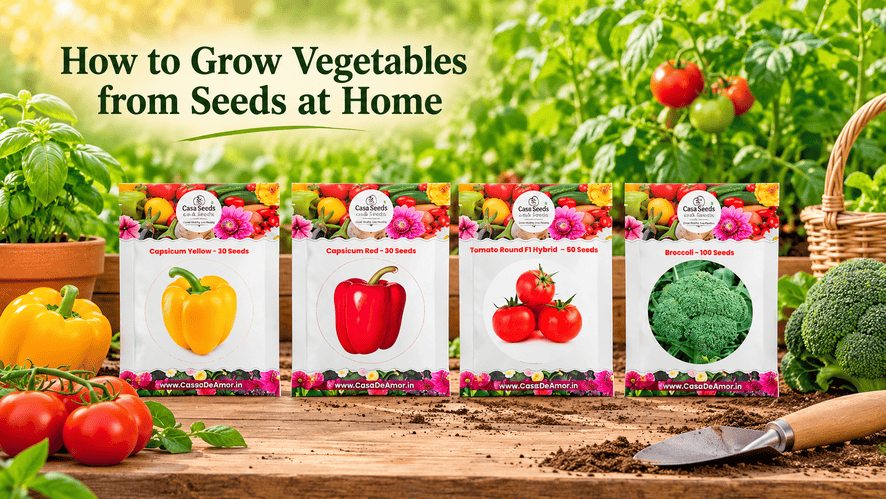
Growing vegetables at home is a rewarding way to enjoy fresh produce while making better use of your available space. Whether you have a spacious backyard, a small balcony, a terrace, or a few pots near a sunny window, you can create a productive home garden with the right approach. One of the easiest ways to begin is by growing plants from vegetable seeds. This method gives you more control over the varieties you grow, the growing conditions, and the overall gardening process.
Home gardening does not require professional experience or expensive equipment. With suitable seeds, healthy soil, adequate sunlight, and regular watering, beginners can successfully grow several vegetables at home. From tomatoes and spinach to radishes and coriander, many common vegetables can grow well in containers and garden beds.
Here is a step-by-step guide to help you start growing vegetables from seeds at home.
1. Choose the Right Vegetable Seeds
Selecting suitable seeds is the first step towards a healthy home garden. Different vegetables have different growing requirements, including temperature, sunlight, soil conditions, and growing space. Therefore, choose varieties according to your local climate and available gardening area.
For beginners, some easy-to-grow options include:
Tomatoes: Suitable for pots and garden beds with sufficient sunlight and support.
Spinach: A leafy vegetable that grows well in containers and relatively cooler conditions.
Radishes: Fast-growing vegetables that can be harvested within a few weeks, depending on the variety.
Coriander: Can be grown in shallow containers with adequate sunlight.
Green chillies: Suitable for pots and require regular sunlight.
Fenugreek: An easy-to-grow leafy vegetable that can be cultivated in small spaces.
Always check the seed packet for information about sowing depth, spacing, germination time, and the recommended growing season. Choosing quality vegetable seeds suited to your region can improve germination and plant development.
2. Select Suitable Containers or a Garden Space
You do not need a large garden to grow vegetables at home. Many varieties grow successfully in pots, grow bags, recycled containers, and raised garden beds.
Choose containers according to the vegetable's root development. For example, leafy vegetables such as spinach can grow in relatively shallow containers, while tomatoes and other deep-rooted vegetables require larger pots.
Make sure every container has sufficient drainage holes at the bottom. Proper drainage prevents excess water from accumulating around the roots and reduces the risk of root damage.
If you are using a terrace or balcony, arrange the containers where plants can receive sufficient sunlight without overcrowding.
3. Prepare Nutrient-Rich Soil
Healthy soil provides essential nutrients, moisture, and support for growing plants. A loose, well-draining growing medium is generally suitable for most home vegetable gardens.
You can prepare a growing mixture using garden soil, compost, and cocopeat. These ingredients help provide nutrients, improve soil structure, and support moisture retention.
Compost adds organic matter to the growing medium, while cocopeat helps maintain moisture. You can also use a suitable potting mix available from gardening stores.
Before sowing seeds, remove stones, weeds, and unwanted debris from the soil. Break up large soil clumps to create a loose and uniform growing medium.
Avoid using heavy, compacted soil in containers because it can restrict root development and affect drainage.
4. Sow Seeds at the Correct Depth
Proper sowing is essential for successful seed germination. Different vegetables require different sowing depths, so always follow the instructions provided on the seed packet.
As a general guideline, small seeds are usually sown closer to the soil surface, while larger seeds can be planted slightly deeper.
Follow these steps:
Fill your container with prepared potting soil.
Make small holes or shallow rows according to the seed requirements.
Place the seeds at the recommended spacing.
Cover them gently with a thin layer of soil.
Spray water carefully to moisten the growing medium.
Place the container in a suitable location according to the vegetable's germination requirements.
Avoid planting too many seeds in a small area. Overcrowding can create competition for nutrients, sunlight, and space.
5. Provide Adequate Sunlight
Sunlight plays an important role in vegetable plant growth. Most common fruiting vegetables, including tomatoes and chillies, need around six to eight hours of direct sunlight daily.
Leafy vegetables such as spinach and coriander may tolerate partial shade, depending on the variety and local weather conditions.
Place your containers in an area that receives suitable sunlight throughout the day. If you are gardening on a balcony, observe how sunlight moves across the space before deciding where to keep your pots.
During extremely hot weather, some plants may benefit from partial afternoon shade to prevent excessive heat stress.
6. Water the Seeds and Seedlings Carefully
Watering is another important factor that influences germination and plant development. Seeds need consistent moisture to begin germinating, but excessive watering can damage them.
Use a spray bottle or a gentle watering can during the initial germination stage. This prevents small seeds from being displaced by strong water flow.
Once seedlings develop, adjust watering according to the plant's needs, weather conditions, and container size.
Check the top layer of soil before watering. If it feels dry, water the plants gently. Avoid keeping the soil continuously waterlogged because excess moisture can encourage fungal problems and root damage.
7. Thin Seedlings and Provide Proper Care
When multiple seeds germinate close together, the seedlings may compete for nutrients, sunlight, and growing space.
Once the seedlings develop a few true leaves, remove weaker or overcrowded plants. Keep the healthiest seedlings at the recommended spacing.
You should also remove weeds regularly because they compete with vegetable plants for water and nutrients.
As plants grow, provide suitable support to varieties such as tomatoes and climbing vegetables. Inspect leaves and stems periodically for pests, discolouration, or other signs of damage.
8. Use Organic Fertilizers for Healthy Growth
Vegetable plants require nutrients at different stages of development. A suitable fertilizer can support healthy roots, foliage, flowering, and fruit production. Well-decomposed compost is a useful organic nutrient source for home gardens. You can also consider other suitable organic fertilizers according to the crop's requirements.
Avoid applying excessive fertilizer, as too many nutrients can affect plant growth. Always follow the recommended application quantity and frequency. Healthy soil, appropriate watering, and balanced nutrition together create favourable conditions for productive vegetable plants.
9. Harvest Vegetables at the Right Time
Harvesting at the correct stage helps maintain the taste, texture, and quality of homegrown vegetables.
Leafy vegetables such as spinach and fenugreek can often be harvested gradually by picking mature outer leaves. Radishes should be harvested when their roots reach the recommended size.
Tomatoes can be picked when they develop the appropriate colour and maturity for their variety. Green chillies can generally be harvested once they reach a suitable size.
Use clean gardening scissors or tools when harvesting to avoid damaging the plant. Regular harvesting also encourages continued production in several vegetable varieties.
Start Your Home Vegetable Garden with the Right Seeds
Growing vegetables at home is a simple activity that can become a rewarding gardening habit. You can begin with just a few containers and easy-to-grow varieties before gradually expanding your garden. Choosing suitable vegetable seeds, preparing healthy soil, providing adequate sunlight, and maintaining a consistent watering schedule are the foundations of successful home gardening.
With regular care and patience, even beginners can enjoy fresh vegetables grown in their own homes. Start with a few varieties, understand their growing requirements, and gradually develop a home garden that provides fresh produce throughout the suitable growing seasons.
Frequently Asked Questions (FAQs)
1. Which vegetables are easiest to grow from seeds at home?
Spinach, coriander, fenugreek, radish, tomatoes, and green chillies are popular choices for home gardening. Many of these vegetables can grow successfully in pots and grow bags with suitable sunlight and watering.
2. How long do vegetable seeds take to germinate?
Germination time depends on the vegetable variety and growing conditions. Radish seeds may germinate within 3–7 days, while tomatoes generally take around 5–10 days. Some varieties may take longer depending on temperature and moisture.
3. Can I grow vegetables from seeds in pots?
Yes, many vegetables can be grown in pots, containers, and grow bags. Choose the right container size, ensure proper drainage, and use a nutrient-rich potting mixture for healthy plant development.
4. How often should I water vegetable seeds?
Keep the soil consistently moist during germination without making it waterlogged. Use a spray bottle or gentle watering can. Once seedlings emerge, adjust watering according to soil moisture, weather, and plant requirements.
5. What is the best season to grow vegetables from seeds?
The best growing season depends on the vegetable variety and local climate. Cool-season vegetables such as spinach, radish, and coriander generally grow well during cooler months, while tomatoes and chillies can be grown during suitable warmer growing periods.
6. Do vegetable plants need direct sunlight?
Most vegetable plants require sufficient sunlight for healthy growth. Fruiting vegetables such as tomatoes and chillies generally need around six to eight hours of sunlight daily, while some leafy vegetables can tolerate partial shade.