Choosing the right mattress is essential for maintaining comfortable sleep and proper body support. A mattress that feels comfortable initially may not provide the right level of support throughout the night. This is why understanding mattress construction, pressure distribution and spinal alignment is important before making a purchase.
A pocket spring mattress is designed to offer individualised support through separately encased springs that respond independently to body weight and movement. Unlike traditional interconnected spring mattresses, its individual springs can adjust to pressure applied to different areas of the body. This construction helps provide balanced support while reducing the transfer of movement across the sleeping surface.
For people looking for a mattress that combines responsive support, comfort and reduced motion disturbance, a pocket spring mattress can be a practical option. Brands like Loom and Needles offer an opportunity to explore mattress choices that suit different sleeping preferences and comfort requirements.
Let's understand how a pocket spring mattress supports the body, what makes its construction different and what to consider before buying one.
What Is a Pocket Spring Mattress?
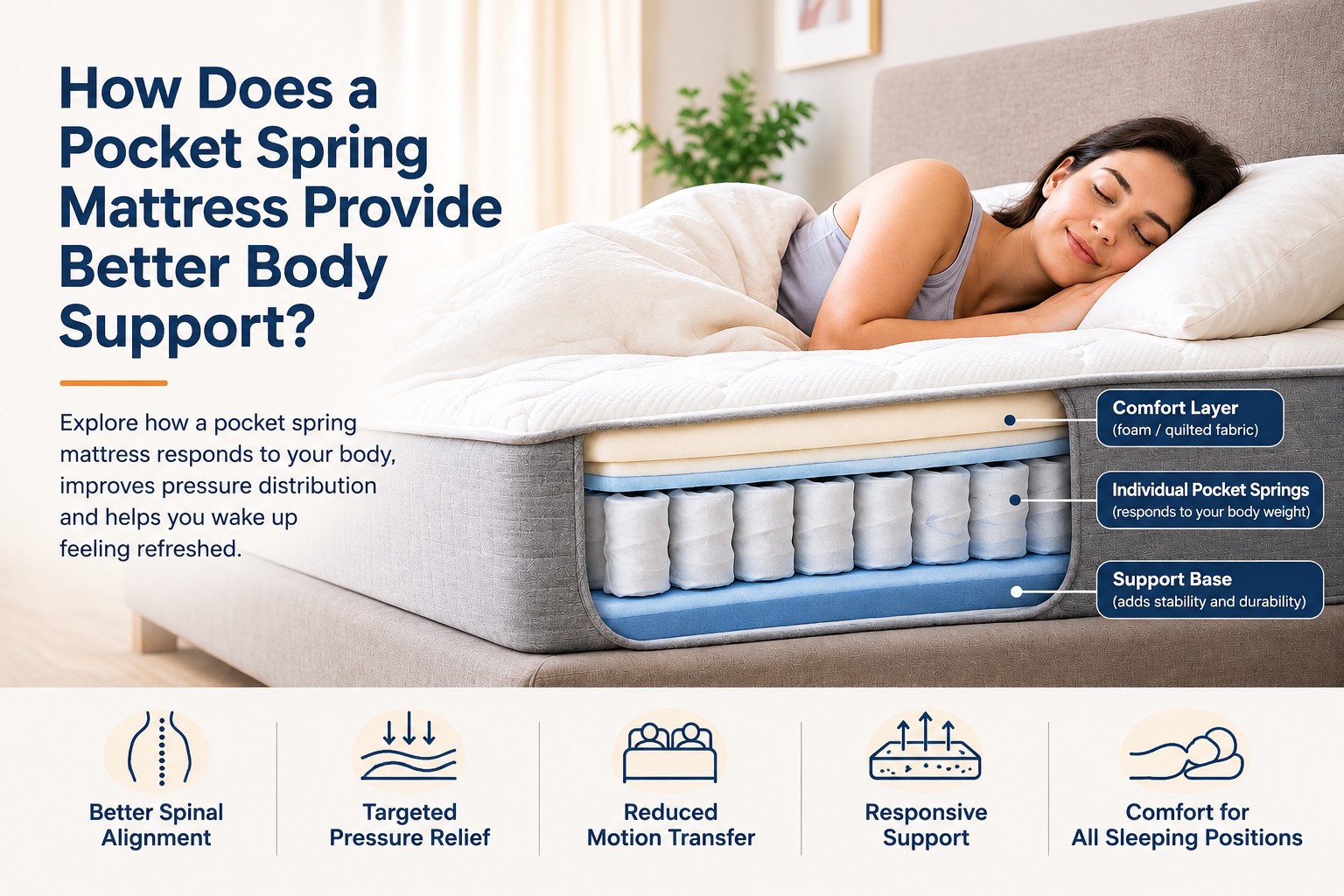
A pocket spring mattress contains multiple individual springs, each enclosed in its own fabric pocket. These springs work independently rather than being connected through a single interconnected spring system.
When someone lies on the mattress, the springs beneath their body compress according to the pressure applied. For example, the springs supporting the shoulders may compress differently from those beneath the waist or legs.
This independent movement allows the mattress to respond to different body areas instead of distributing pressure uniformly across the entire sleeping surface.
Most pocket spring mattresses also include additional comfort layers made from materials such as foam, quilted fabric or other cushioning materials. These layers improve the surface feel while the spring system provides the underlying support.
How Does a Pocket Spring Mattress Provide Better Body Support?
The main advantage of a pocket spring mattress is its ability to respond independently to different pressure points. Its construction can help distribute body weight more evenly and maintain a comfortable sleeping position.
Here are the key ways it supports the body.
1. Independent Springs Respond to Different Body Areas
One of the most important features of a pocket spring mattress is its individually encased spring system.
Every spring responds to the pressure applied directly above it. When you change your sleeping position, the springs adjust according to your new position and body weight distribution.
For example:
Shoulders: Springs can compress according to shoulder pressure, allowing the upper body to settle comfortably.
Waist: The spring system provides support according to the pressure applied around the middle section.
Hips: Individual springs respond to the concentrated weight around the hip area.
Legs: Springs beneath the legs adjust to their comparatively different pressure requirements.
This independent response helps create a more adaptable sleeping surface than many traditional interconnected spring systems.
2. Helps Maintain Natural Spinal Alignment
Spinal alignment is an important consideration when choosing a mattress. Your sleeping surface should support the body without allowing heavier areas to sink excessively or creating uncomfortable pressure around the shoulders and hips.
A properly selected pocket spring mattress can help maintain a more natural sleeping posture by responding to the body's weight distribution.
For example, side sleepers generally need enough cushioning around their shoulders and hips while maintaining support around the waist. Back sleepers usually benefit from balanced support that helps prevent excessive sinking around the lower back.
The right mattress firmness depends on body weight, sleeping position and personal comfort preferences.
A mattress that is too soft may allow excessive sinking, while an overly firm mattress may create pressure around prominent body areas. Choosing the appropriate firmness is therefore more important than simply selecting the firmest available option.
3. Distributes Body Weight More Evenly
Uneven pressure distribution can make certain areas of the body feel uncomfortable during sleep.
A pocket spring mattress helps address this through its independently responsive spring construction. Instead of relying on one interconnected spring structure, individual springs compress according to the weight placed on them.
This can help distribute pressure across different areas of the sleeping surface.
For people who frequently change sleeping positions, this responsive construction can make it easier to find a comfortable resting position.
However, the overall pressure-relieving experience also depends on the comfort layers, spring arrangement and mattress firmness.
4. Reduces Pressure Around Shoulders and Hips
Shoulders and hips are among the areas that experience concentrated pressure, particularly when sleeping on your side.
A mattress that does not accommodate these areas properly may create discomfort and encourage frequent position changes.
A pocket spring mattress with suitable cushioning can allow the shoulders and hips to settle into the surface while the spring system provides underlying support.
This combination is particularly useful for side sleepers who want a balance between cushioning and support.
When comparing mattresses, pay attention to the comfort layer thickness and material. A well-designed cushioning layer can make a noticeable difference in how the mattress feels.
5. Minimises Motion Transfer Between Sleeping Partners
Movement transfer is an important consideration for couples sharing a mattress.
In traditional interconnected spring mattresses, movement on one side can sometimes create noticeable movement across the sleeping surface.
Pocket spring mattresses are designed differently. Since each spring moves independently, movement in one area is less likely to affect the entire mattress.
For example, if one person turns over or gets out of bed, the other person may experience less disturbance.
This makes a pocket spring mattress worth considering for couples, particularly those with different sleeping schedules or movement habits.
Keep in mind that motion isolation also depends on the mattress's comfort layers and overall construction.
6. Provides Responsive Support When Changing Positions
Some mattresses can feel restrictive when you move from one sleeping position to another.
Pocket spring systems offer a responsive feel because their springs compress and return according to the pressure applied.
This can make position changes feel more natural.
Whether you sleep on your back, side or stomach, a suitable pocket spring mattress can provide a balance of responsiveness and cushioning.
People who move frequently during the night may find this feature particularly useful when comparing different mattress constructions.
7. Supports Different Body Weights
Not everyone places the same amount of pressure on a mattress. Body weight, sleeping posture and body shape influence how a mattress responds.
A pocket spring mattress can accommodate different pressure levels through its individual spring construction.
However, not every pocket spring mattress offers the same support. Spring count, spring tension, wire thickness, comfort materials and firmness all influence the final feel.
People with a higher body weight should pay particular attention to the mattress's support specifications and recommended weight capacity rather than assuming that every pocket spring model will provide adequate support.
Pocket Spring Mattress vs Traditional Spring Mattress
Both mattress types use springs for support, but their internal construction differs.
A traditional spring mattress generally uses an interconnected spring system. When pressure is applied to one section, movement may affect nearby springs.
A pocket spring mattress uses individually wrapped springs that respond more independently.
Here are some important differences to consider:
Independent movement: Pocket springs respond individually, while traditional interconnected springs work more collectively.
Motion isolation: Pocket spring construction can reduce movement transfer, making it a useful option for couples.
Body contouring: Individual springs can adapt to pressure in different areas, whereas traditional spring systems may provide a more uniform response.
Sleeping comfort: Both types can offer comfortable sleep, depending on their construction, firmness and cushioning layers.
Price: Pocket spring mattresses may cost more than basic traditional spring models because of their individual spring construction and additional materials.
The better choice depends on your budget, sleeping habits and support requirements.
Is a Pocket Spring Mattress Suitable for Different Sleeping Positions?
Yes, a pocket spring mattress can work for different sleeping positions, provided you select the right firmness and cushioning.
For Side Sleepers
Side sleepers often experience greater pressure around their shoulders and hips.
A medium or medium-soft mattress may be worth considering, depending on body weight and personal comfort preferences.
Look for:
Adequate cushioning around the shoulders.
Pressure accommodation around the hips.
Sufficient support around the waist.
A comfortable surface that does not feel excessively firm.
For Back Sleepers
Back sleepers generally benefit from balanced support that allows the lower back to maintain a comfortable position.
A medium-firm pocket spring mattress may be a suitable starting point for many people.
Consider:
Even support across the back.
Limited excessive sinking around the hips.
Comfortable cushioning around the upper body.
A stable sleeping surface.
For Stomach Sleepers
Stomach sleepers often need a firmer sleeping surface to reduce excessive sinking around the midsection.
A medium-firm or firm pocket spring mattress may be more appropriate, depending on body weight and comfort preferences.
Look for a mattress that provides sufficient support without creating uncomfortable pressure.
What Features Should You Check Before Buying a Pocket Spring Mattress?
The spring system is important, but it should not be the only factor influencing your buying decision.
Consider these features before selecting a mattress.
1. Spring Count and Configuration
Spring count indicates how many springs are included in the mattress. However, a higher spring count does not automatically mean better support.
The size of the mattress, spring quality, arrangement and individual spring characteristics also matter.
Look for clear product specifications instead of choosing a mattress based only on the number of springs.
2. Mattress Firmness
Firmness determines how the mattress feels when you lie down.
Common options include:
Soft: Provides a more cushioned surface.
Medium: Offers a balance between cushioning and support.
Medium-firm: Provides a comparatively stable feel with moderate cushioning.
Firm: Offers less surface cushioning and a more supportive feel.
Choose firmness according to your sleeping position, body weight and comfort preferences.
3. Comfort Layer Materials
The comfort layer sits above the spring system and influences the initial feel of the mattress.
Depending on the model, it may include foam, quilted fabric or other cushioning materials.
Check the material type, thickness and construction to understand how the mattress will feel during everyday use.
4. Mattress Thickness
Mattress thickness can influence comfort and support, but thicker does not necessarily mean better.
The internal composition is more important than the overall measurement.
Consider your existing bed frame, available space and the mattress thickness recommended for your sleeping requirements.
5. Fabric and Breathability
The mattress cover is another important feature.
A comfortable fabric can improve the surface feel and overall sleeping experience. Also check whether the mattress uses breathable materials and whether its construction supports airflow.
This can be particularly relevant for people who tend to feel warm while sleeping.
6. Warranty and Trial Period
A mattress is a long-term household purchase, so reviewing the warranty and return policy is important.
Before buying, check:
Warranty duration.
What types of defects are covered.
Whether sagging is covered and under what conditions.
Trial period availability.
Return and exchange conditions.
Delivery and installation charges, if applicable.
Understanding these details helps you make a more informed purchase.
Common Mistakes to Avoid When Buying a Pocket Spring Mattress
Even a well-constructed mattress may not be suitable if it does not match your requirements.
Avoid these common mistakes:
Choosing based only on spring count: More springs do not automatically guarantee better comfort or durability. Consider the complete mattress construction.
Ignoring sleeping position: A mattress that feels comfortable for a back sleeper may not provide the same experience for a side sleeper.
Buying the wrong firmness: An excessively soft or firm mattress may not provide the comfort and support you need.
Overlooking mattress dimensions: Always measure your bed frame before ordering to avoid size-related problems.
Ignoring the comfort layers: The spring system provides underlying support, but cushioning materials significantly influence the sleeping experience.
Not checking warranty conditions: Review the coverage and exclusions before making the purchase.
How Much Does a Pocket Spring Mattress Cost?
The price of a pocket spring mattress depends on several factors, including mattress size, spring quality, construction, materials and brand.
Generally, mattresses with more advanced construction, additional comfort layers and premium materials may cost more than basic models.
Before comparing prices, consider the following:
Mattress size: King and queen sizes generally require more materials than single-size mattresses.
Spring construction: Spring quality, configuration and design influence manufacturing costs.
Comfort materials: Additional cushioning layers can affect the overall price.
Brand and warranty: Product quality, warranty coverage and after-sales support can influence the purchase value.
Additional features: Specialised fabric, reinforced edges and other construction features may increase the price.
Instead of choosing the cheapest available option, compare the specifications and features offered at different price points.
Loom and Needles is a brand worth considering when exploring mattress options for everyday sleeping comfort. Reviewing the product specifications, available sizes and warranty conditions can help you identify a suitable choice.
Why Consider Loom and Needles When Choosing a Mattress?
Choosing a mattress involves more than selecting a particular spring technology. You should also consider construction quality, comfort preferences, available sizes and long-term usability.
When exploring mattress options from Loom and Needles, focus on the features that directly influence your sleeping experience.
Consider your preferred firmness, sleeping position, mattress dimensions and the type of cushioning you need.
It is also useful to compare product specifications carefully so you understand what you are paying for.
A well-selected mattress should fit your bed frame, accommodate your sleeping habits and provide a comfortable balance of cushioning and support.
Frequently Asked Questions About Pocket Spring Mattresses
1. Does a pocket spring mattress provide better body support?
A pocket spring mattress can provide responsive and targeted support because its individual springs adjust independently to different pressure points. Its overall support also depends on spring quality, mattress firmness and comfort layers.
2. Is a pocket spring mattress good for back support?
A suitably selected pocket spring mattress can help maintain comfortable spinal alignment by supporting different areas of the body. Medium-firm options may suit many back sleepers, although individual requirements vary.
3. Is a pocket spring mattress better than a foam mattress?
Neither option is universally better. Pocket spring mattresses offer responsive spring-based support and can reduce motion transfer, while foam mattresses provide a different cushioning and contouring experience. Your sleeping position and comfort preferences should guide the decision.
4. Can couples use a pocket spring mattress?
Yes. Its individually encased springs can reduce movement transfer between sleeping partners. This may help minimise disturbances when one person changes sleeping positions or gets out of bed.
5. How long does a pocket spring mattress last?
Its lifespan depends on spring quality, materials, usage, maintenance and overall construction. Following the manufacturer's care instructions and using a suitable bed base can help maintain its condition.
6. Is a pocket spring mattress suitable for side sleepers?
Yes. A pocket spring mattress with adequate cushioning around the shoulders and hips can be suitable for side sleepers. Medium or medium-soft options may be worth considering depending on body weight and comfort preferences.
7. Does a pocket spring mattress help reduce pressure points?
Its independently responsive springs can accommodate different pressure levels across the body. The comfort layers also contribute to pressure distribution, particularly around the shoulders and hips.
8. What should I check before purchasing a pocket spring mattress?
Check spring construction, firmness, comfort layer materials, mattress dimensions, fabric, warranty and return conditions. Comparing these features will help you select a mattress that suits your sleeping requirements.
Conclusion
A pocket spring mattress offers a practical combination of independent spring movement, responsive support and reduced motion transfer. Its construction allows different springs to respond to pressure across the shoulders, hips, back and legs, helping create a more adaptable sleeping surface.
However, choosing the right mattress involves more than looking at the spring system. Firmness, comfort layers, body weight, sleeping position and mattress quality all influence the final experience.
If you are planning to upgrade your sleeping setup, explore the mattress options available from Loom and Needles. Compare the construction, comfort features, sizes and warranty details to find a mattress that suits your everyday sleeping needs.