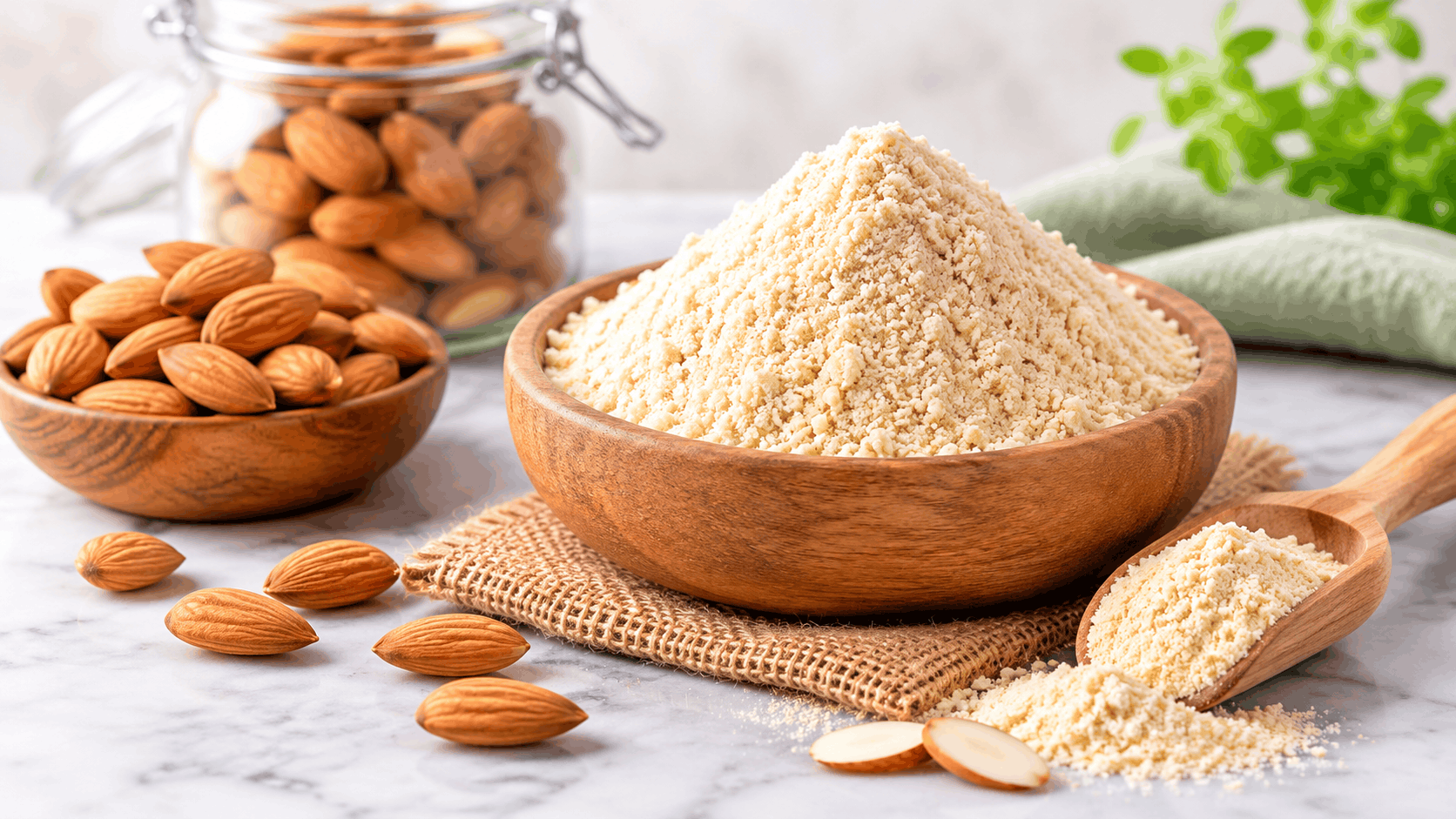
Almond flour has become a popular ingredient among home bakers, health-conscious consumers, and people exploring alternative flours for everyday cooking. Known for its mild nutty flavour, fine texture, and versatility, it is widely used in cookies, cakes, pancakes, and several gluten-free recipes. But have you ever wondered how whole almonds are transformed into the soft, fine powder we use in our kitchens? The process is simpler than you might imagine, yet it requires careful preparation and processing to achieve the right consistency.
Step 1: Selecting High-Quality Raw Almonds
The process begins with selecting good-quality raw almonds. Fresh, clean almonds with a uniform appearance are preferred because their quality directly influences the flavour, aroma, and texture of the final flour. Almonds are checked for damaged nuts, unwanted particles, and impurities before moving to the next stage.
Step 2: Cleaning and Removing the Skin
Once selected, almonds are thoroughly cleaned to remove dust and other impurities. Depending on the type of almond flour being produced, the almonds may undergo blanching.
Blanching involves briefly placing almonds in hot water to loosen their outer brown skins. The skins are then removed, leaving behind smooth, white almond kernels. This step is particularly important when making blanched almond flour, which has a lighter colour and finer appearance.
Step 3: Drying the Almonds
After blanching, the almonds need to be dried properly to remove excess moisture. This is an important stage because moisture can affect the grinding process and the shelf life of the finished product.
The almonds are dried under controlled conditions until they reach a suitable moisture level. For almond flour made from unblanched almonds, the cleaning and drying stages are carried out without removing the skins.
Step 4: Grinding Almonds into Fine Powder
Once adequately dried, the almonds are transferred to grinding equipment. They are processed carefully to produce a fine, consistent powder.
Temperature control is important during this stage. Almonds naturally contain oils, and excessive grinding or heat can cause them to release too much oil, resulting in a paste-like consistency instead of a light flour.
The goal is to achieve a soft, finely ground texture that works well in baking and cooking.
Step 5: Sieving and Quality Checks
After grinding, the almond flour is passed through sieves to separate larger particles from the finer powder. Any coarse pieces may be processed again to achieve a more uniform consistency.
The finished flour is then checked for texture, colour, aroma, and overall quality. Proper processing ensures that the product is suitable for different culinary applications.
Almond Flour vs Almond Meal: What's the Difference?
Although the two are often used interchangeably, almond flour and almond meal can differ in texture and processing.
Almond Flour: Usually made from blanched almonds with their skins removed. It has a finer texture and lighter colour, making it suitable for delicate baking recipes.
Almond Meal: Generally made from whole almonds with their skins intact. It has a coarser texture and a slightly more pronounced nutty appearance.
Understanding this difference can help you choose the right ingredient for your recipe.
Why Almond Flour Is a Versatile Kitchen Ingredient
Almond flour is appreciated for its naturally nutty flavour and versatility. It can be used in gluten-free baking, pancakes, muffins, cookies, breading, and even as a thickening ingredient in certain recipes. It also provides plant-based protein, dietary fibre, and healthy fats, making it an interesting alternative to conventional wheat flour.
However, almond flour is not a direct one-to-one replacement for wheat flour in every recipe, as its moisture absorption and baking properties are different.
From Simple Almonds to a Versatile Flour
The journey from raw almonds to fine almond flour involves several important steps, including selection, cleaning, blanching (when required), drying, grinding, and sieving. Each stage contributes to the final product's texture, flavour, and quality.
Whether you are experimenting with gluten-free baking or looking for alternative ingredients for everyday cooking, understanding how almond flour is made helps you appreciate the care that goes into this versatile kitchen staple.