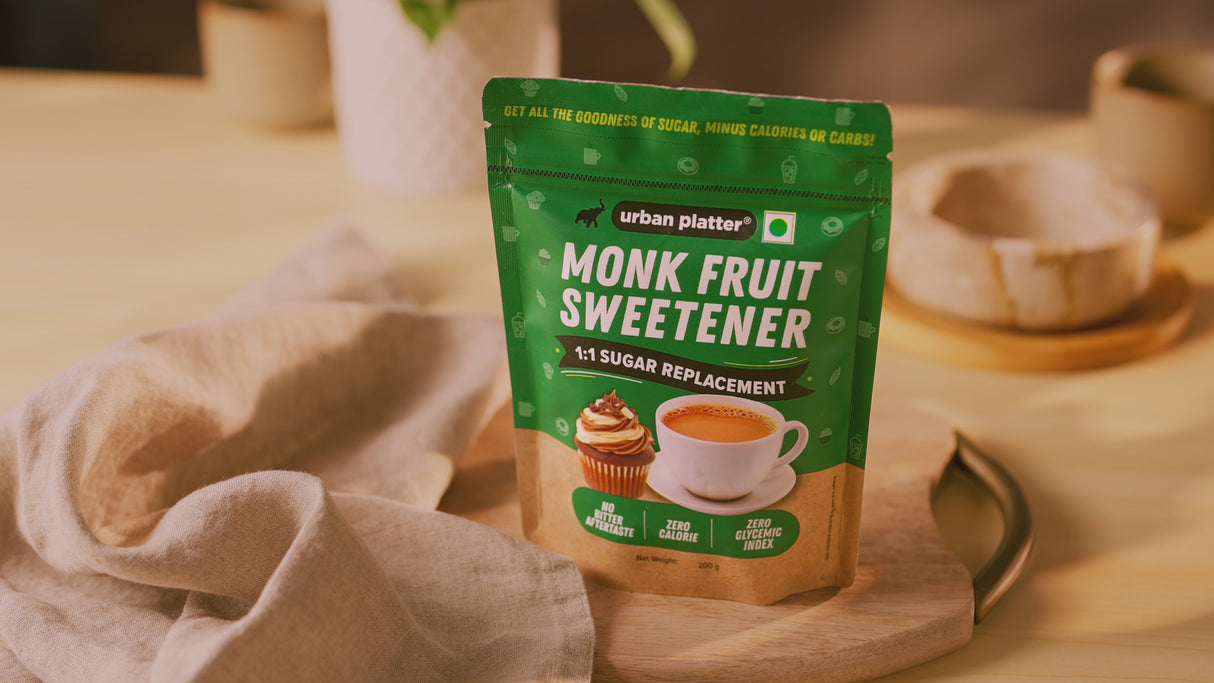
A little sweetness can round out a strong cup of tea, balance a tangy breakfast bowl, or turn a simple dessert into something you look forward to. Monk fruit sweetener offers another way to add that sweetness to everyday recipes. The key is knowing how your particular product behaves.
Monk fruit sweeteners come in different forms, including concentrated drops, powders, and granulated blends. They aren’t always interchangeable: some products are designed to measure like sugar, while others require much smaller amounts. Before you begin, check the label for the suggested conversion and ingredients.
Once you’re familiar with your sweetener, start with small adjustments to foods and drinks you already enjoy. Here are seven practical ways to bring it into your kitchen.
1. Sweeten Your Daily Tea
Your regular cup of tea is an easy place to start. Whether you prefer masala chai, black tea, or a gentle herbal infusion, monk fruit sweetener lets you adjust the sweetness a little at a time.
Prepare your tea as usual, then stir in a small amount of sweetener. Taste before adding more, especially when using a concentrated product. For masala chai, try it alongside familiar spices such as cardamom, ginger, or cinnamon.
Making iced tea? Dissolve a suitable powdered or granulated sweetener while the tea is warm, then cool it before adding ice. Liquid products can be convenient for sweetening individual glasses. Follow the product’s directions, since some blends dissolve more readily than others.
2. Stir It into Coffee and Homemade Lattes
Monk fruit sweetener can also fit into your morning coffee routine. Try it in filter coffee, a cappuccino, or a homemade latte, adjusting the amount to suit the strength of the brew.
For a simple flavoured latte, combine hot coffee with warm milk, a little sweetener, and a drop of vanilla extract. A sprinkle of cinnamon adds another layer of flavour without requiring a complicated syrup.
If you enjoy cold coffee, blend chilled coffee, milk, ice, and your preferred amount of sweetener. Taste after blending so you can judge the finished drink rather than the stronger coffee mixture alone.
3. Brighten Up Oatmeal and Breakfast Bowls
Plain oatmeal is a useful base for experimenting with sweetness. Cook your oats, then stir in a small amount of monk fruit sweetener before adding toppings.
Apple and cinnamon, banana and peanut butter, or berries and chopped nuts all make satisfying combinations. Because fruit contributes its own sweetness, add it before deciding whether you need more sweetener.
You can use the same approach with overnight oats, chia pudding, or plain yoghurt. For overnight recipes, mix thoroughly and taste again before serving. The finished texture and temperature can change how you experience the overall flavour.
4. Blend It into Smoothies and Lassi
A smoothie made with tart berries or plain yoghurt may need a little sweetness to balance its flavour. Monk fruit sweetener can help you make that adjustment without adding another strongly flavoured ingredient.
Start by blending your fruit, milk or yoghurt, and any extras. Taste the mixture first, then add sweetener only if needed. Ripe bananas and mangoes may already provide enough sweetness.
For a simple sweet lassi, blend plain yoghurt with cold water or milk, a pinch of cardamom, and a small amount of sweetener. Adjust the liquid until you reach your preferred consistency. This is an easy recipe to prepare one glass at a time while you work out the quantity you enjoy.
5. Use It in Pancakes and Selected Bakes
Pancakes are a practical starting point for cooking with monk fruit sweetener. Add a suitable product to the batter according to its conversion guidance, then serve with fruit, yoghurt, or nut butter.
Baking needs more care. Sugar contributes bulk, moisture, browning, and structure as well as sweetness. Replacing it with a concentrated sweetener can therefore change the result considerably.
For muffins, cakes, and biscuits, choose a recipe developed for the type of sweetener you have. If you’re using a granulated blend intended for baking, follow its instructions closely. A little recipe planning is more useful than assuming every product will work as a direct sugar replacement.
6. Make Simple Desserts
Desserts don’t have to begin with a complicated baking project. Stir monk fruit sweetener into plain yoghurt with vanilla, then layer it with chopped fruit and nuts for a quick parfait.
For a chocolate version, mix yoghurt with unsweetened cocoa powder and sweetener to taste. Add the cocoa gradually and stir well to avoid dry pockets. Chill before serving and finish with sliced strawberries or a few chopped nuts.
You can also experiment with chia puddings and other chilled desserts. When making custards, frozen desserts, or recipes that depend on sugar for texture, use guidance written for your specific sweetener. Different blends can produce noticeably different results.
7. Balance Dressings, Dips, and Sauces
Sweetener has a place in savoury cooking, too. A small amount can soften the sharpness of a lemon dressing or bring balance to a tangy yoghurt dip.
Try whisking olive oil, lemon juice, mustard, and a little monk fruit sweetener together. Taste, then adjust the seasoning and acidity before adding more sweetness.
The same principle works with homemade tomato sauces and dipping sauces: add a little, stir thoroughly, and taste again. Keep the amount modest so the other ingredients remain the focus.
Monk fruit sweetener is easiest to use when you treat each recipe as a small tasting exercise. Start with familiar drinks and simple dishes, learn your product’s conversion, and adjust gradually. From the first cup of tea to an after-dinner dessert, there are plenty of everyday opportunities to find combinations you enjoy.