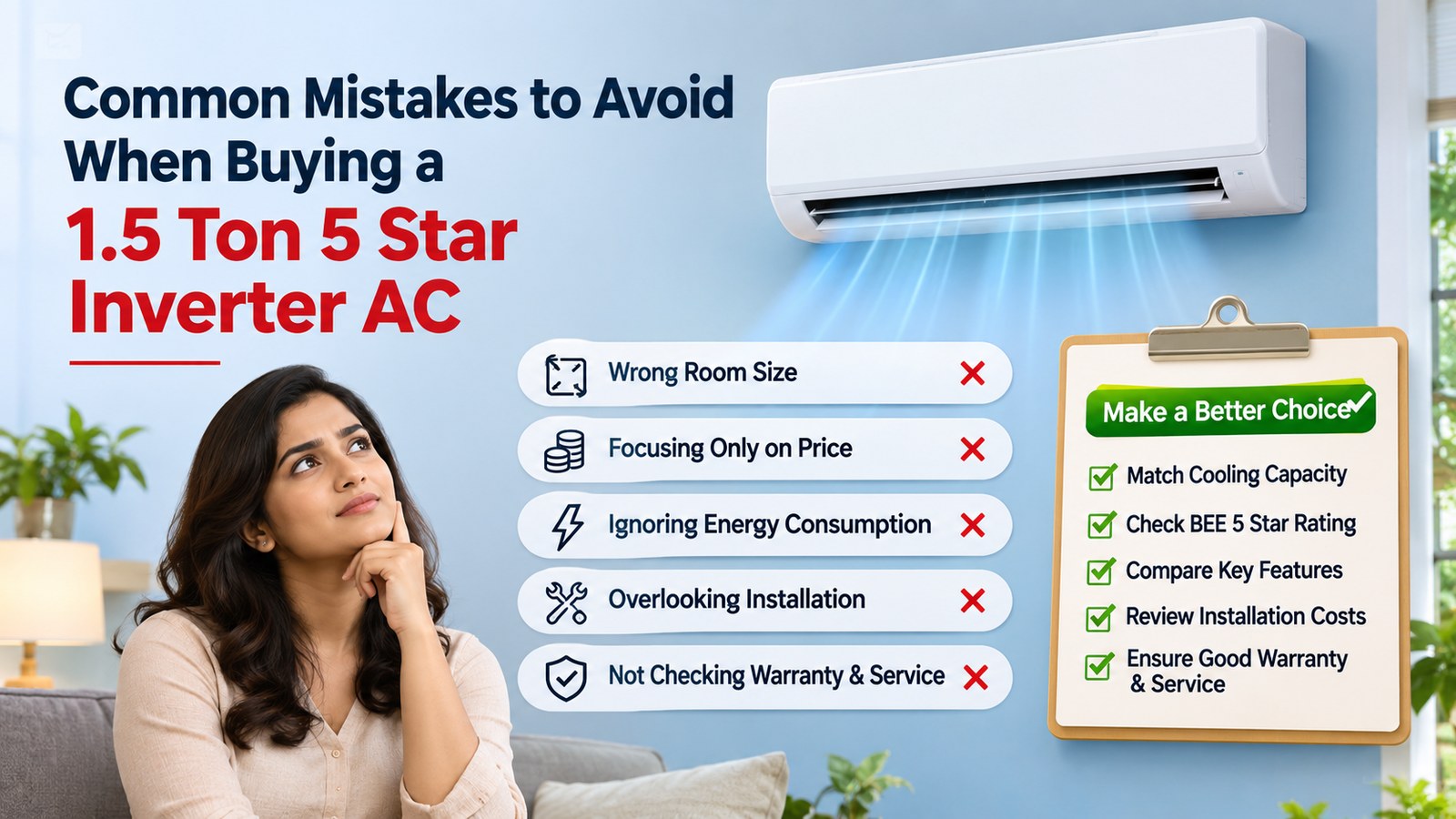
Buying an air conditioner is an important investment, especially when you want reliable cooling without unnecessarily increasing your electricity bills. A 1.5 Ton 5 Star Inverter AC is a popular choice for households looking for a balance between cooling capacity and energy efficiency. However, choosing the right model involves more than checking its tonnage, star rating or price.
Many buyers make the mistake of focusing only on discounts or attractive specifications while overlooking important factors such as room size, cooling requirements, energy consumption, inverter technology, installation costs and maintenance requirements. These oversights can affect cooling performance, operating expenses and overall satisfaction.
Whether you are purchasing an air conditioner for your bedroom, living room or home office, understanding these common mistakes can help you make a more informed decision. Brands such as Akaiindia offer air conditioning options worth considering when comparing features, specifications and suitability for your home.
Let's look at the most common mistakes to avoid when buying a 1.5 Ton 5 Star Inverter AC and how to choose a model that meets your requirements.
1. Ignoring Your Room Size and Cooling Requirements
One of the biggest mistakes buyers make is purchasing an air conditioner without checking whether its cooling capacity matches the room size.
A 1.5-ton air conditioner is generally suitable for medium-sized rooms, but the actual requirement depends on several factors, including ceiling height, sunlight exposure, insulation, the number of occupants and heat-generating appliances.
For example, a bedroom with limited sunlight may require less cooling capacity than a similarly sized room with large windows facing direct sunlight.
Before purchasing a 1.5 Ton 5 Star Inverter AC, consider:
Room dimensions: Measure the length, width and height of the room.
Sunlight exposure: Rooms receiving direct sunlight may require additional cooling capacity.
Occupancy: More people in a room can increase the cooling load.
Appliances: Computers, televisions and other electronic devices generate heat.
Floor level: Top-floor rooms may experience higher temperatures during summer.
Do not assume that 1.5 tons will automatically be suitable for every medium-sized room. Check the manufacturer's recommended room coverage and consider a professional cooling-load assessment if necessary.
2. Choosing an AC Based Only on Its 5 Star Rating
A 5 Star energy rating is an important consideration, but it should not be the only factor influencing your purchase.
The Bureau of Energy Efficiency (BEE) assigns star ratings based on energy-efficiency performance. A higher rating generally indicates better energy efficiency within the applicable rating category and testing framework.
However, buyers should understand that actual electricity consumption also depends on how frequently the AC operates, the selected temperature, outdoor conditions and room insulation.
When comparing a 1.5 Ton 5 Star Inverter AC, check the following:
Annual energy consumption mentioned on the energy label.
Indian Seasonal Energy Efficiency Ratio (ISEER), where applicable.
Rated cooling capacity.
Electricity consumption under different operating conditions.
BEE label validity and applicable rating period.
For example, two air conditioners with the same tonnage and star rating may have different annual energy consumption figures. Comparing these specifications can help you identify the more suitable option.
3. Overlooking Inverter Technology
Another common mistake is not understanding how inverter technology works.
Traditional fixed-speed air conditioners generally switch their compressors on and off to maintain the selected temperature. Inverter ACs adjust compressor speed according to the cooling requirement.
This allows an inverter air conditioner to regulate its cooling output rather than repeatedly operating at full capacity.
A 1.5 Ton 5 Star Inverter AC can offer several practical advantages:
More consistent room temperatures.
Reduced compressor start-stop cycles.
Better adjustment to changing cooling requirements.
Potentially lower electricity consumption compared with less efficient alternatives.
More comfortable cooling during extended operation.
However, inverter technology alone does not guarantee lower electricity bills. Actual savings depend on the model's efficiency, usage duration, installation quality and environmental conditions.
When evaluating an inverter AC, check its compressor specifications, operating range, energy label and warranty coverage.
4. Selecting the Cheapest Model Without Comparing Features
Getting an attractive deal is always appealing, but choosing an air conditioner purely because it has the lowest price can lead to compromises.
Some buyers overlook important features that affect everyday comfort and convenience.
Before finalising your purchase, compare:
Cooling modes and operating settings.
Airflow adjustment options.
Temperature control functions.
Sleep mode, if available.
Timer functionality.
Air filtration features, if included.
Indoor and outdoor unit specifications.
Warranty terms.
For example, someone who regularly uses an AC throughout the night may value sleep mode and convenient temperature controls more than additional features they rarely use.
Akaiindia is one brand you can include in your comparison when evaluating air conditioner specifications, pricing and available features.
The objective should be to find a model that offers the right combination of cooling performance, energy efficiency and useful features rather than simply purchasing the cheapest available option.
5. Not Checking Electricity Consumption Before Buying
A 5 Star rating does not mean that an air conditioner will consume the same amount of electricity every month.
Your electricity bill depends on several variables, including operating hours, temperature settings, outdoor temperature and cooling requirements.
Before buying a 1.5 Ton 5 Star Inverter AC, check the annual electricity consumption mentioned on its BEE label.
You can also estimate its running cost using this simple formula:
Estimated Electricity Cost = Units Consumed × Electricity Tariff
For example, if your air conditioner consumes 2 units of electricity per day and your electricity tariff is ₹8 per unit:
Daily electricity cost: 2 × ₹8 = ₹16.
Monthly electricity cost for 30 days: ₹480.
This is only an illustrative calculation. Actual consumption may vary depending on operating conditions.
Checking the energy consumption specification helps you estimate long-term running expenses instead of making a purchase decision based entirely on the initial price.
6. Ignoring Installation Requirements
Even a well-designed air conditioner may not deliver satisfactory performance if it is installed incorrectly.
Poor installation can affect cooling efficiency, drainage, airflow and long-term reliability.
Some buyers focus entirely on purchasing the indoor and outdoor units without considering installation requirements.
Before ordering your AC, check:
Whether standard installation is included in the purchase price.
Whether additional copper piping is chargeable.
Whether a mounting bracket is included.
Whether drainage pipe requirements involve additional costs.
Whether electrical wiring or a dedicated circuit is required.
Whether the installation location provides adequate outdoor airflow.
The outdoor unit should have sufficient clearance for heat dissipation, while the indoor unit should be positioned to distribute cool air effectively.
Always use trained installation professionals and follow the manufacturer's installation guidelines. Proper installation is essential for achieving the expected performance from your 1.5 Ton 5 Star Inverter AC.
7. Overlooking Noise Levels
Noise is another factor that buyers frequently ignore, particularly when purchasing an air conditioner for a bedroom or study room.
An AC may offer excellent cooling performance, but excessive indoor noise can affect sleep, concentration and overall comfort.
Before purchasing, check the indoor unit's sound level specifications, generally expressed in decibels (dB).
Also consider:
Indoor fan noise at different operating speeds.
Outdoor unit noise.
Vibration during operation.
Placement of the outdoor unit.
Whether the selected operating mode reduces fan noise.
If you plan to use your air conditioner while sleeping or working, compare noise specifications instead of assuming that every inverter model operates at the same sound level.
8. Not Checking the Warranty and After-Sales Service
An air conditioner is a long-term household appliance, so warranty coverage and service availability deserve careful attention.
Some buyers compare prices and specifications but forget to check what happens if the compressor, electronic components or other parts require servicing.
Before buying an AC from Akaiindia or any other brand, review the warranty conditions carefully.
Pay attention to:
Product warranty duration.
Compressor warranty.
PCB and other component coverage, if specified.
Whether the warranty includes labour charges.
Conditions for free service.
Availability of authorised service centres.
Customer support and service request procedures.
Also check whether warranty registration is required after installation.
A longer warranty period may provide additional reassurance, but always read the terms and exclusions rather than judging coverage by the duration alone.
9. Purchasing Without Comparing Different Models
Another mistake is making a purchase decision after checking only one or two air conditioners.
Even when two models have identical tonnage and star ratings, their specifications, energy consumption, operating features and prices can differ.
Create a shortlist of models and compare the following factors:
BEE star rating and label validity.
ISEER value.
Annual energy consumption.
Cooling capacity.
Compressor specifications.
Noise levels.
Available operating modes.
Warranty coverage.
Installation charges.
Total purchase cost.
This comparison helps you understand whether a particular model offers the features and performance you actually need.
When considering an Akaiindia air conditioner, review its available model specifications and compare them with other options in the same category.
10. Choosing the Wrong Temperature Settings
Some buyers believe that setting the AC to the lowest possible temperature will cool the room faster.
However, setting an extremely low temperature does not necessarily improve cooling speed. It can increase operating time and electricity consumption, depending on the conditions.
For everyday use, a temperature setting around 24°C to 26°C is a reasonable starting point for many households. You can adjust it according to personal comfort, humidity and room conditions.
Consider these practical habits:
Keep doors and windows closed while the AC is running.
Use curtains to reduce direct sunlight.
Clean the filters regularly.
Avoid unnecessary temperature adjustments.
Use sleep or timer settings when suitable.
Maintain adequate airflow around the indoor unit.
These small changes can improve comfort and help avoid unnecessary energy consumption.
11. Ignoring Air Filters and Maintenance Requirements
Air filters collect dust and airborne particles during regular operation. When filters become clogged, airflow can become restricted, affecting cooling performance.
Some buyers assume that an inverter AC does not require regular maintenance. This is incorrect.
Routine maintenance is important for keeping your air conditioner operating properly.
Follow these basic practices:
Clean the air filters: Check the filters regularly and clean them according to the manufacturer's instructions.
Inspect the outdoor unit: Keep the surrounding area free from obstructions that could restrict airflow.
Check drainage: Ensure that condensate water drains properly and does not cause leakage.
Schedule professional servicing: Arrange periodic maintenance as recommended by the manufacturer.
Monitor unusual sounds: Contact an authorised technician if you notice unusual noises, reduced cooling or water leakage.
Proper maintenance can help maintain cooling performance and identify potential issues before they become more serious.
12. Forgetting to Calculate the Total Purchase Cost
The displayed product price is not always the final amount you will spend.
Buyers sometimes compare only the listed prices without considering installation and additional accessories.
When purchasing a 1.5 Ton 5 Star Inverter AC, calculate the complete cost, including:
Air conditioner price.
Installation charges.
Additional copper piping.
Outdoor unit stand or mounting bracket.
Electrical accessories, if required.
Stabiliser, if recommended for the installation and electrical conditions.
Additional service charges, if applicable.
Also check available bank offers, exchange benefits, seasonal discounts and manufacturer promotions.
A slightly more expensive model may offer better value if it has lower energy consumption, more suitable features or stronger warranty coverage.
Always compare the final payable amount rather than relying only on the advertised price.
13. Not Considering Your Local Climate
Climate conditions can influence how frequently an air conditioner operates and how much cooling capacity is required.
For example, households in regions experiencing extremely hot summers may use their AC for longer periods than households in relatively moderate climates.
If you live in a hot region such as Madhya Pradesh, consider the following before purchasing:
Outdoor operating temperature specifications.
Cooling performance under high ambient temperatures.
Compressor operating range.
Room insulation.
Direct sunlight exposure.
Expected daily usage hours.
If your room receives significant afternoon sunlight, using curtains or blinds can help reduce the heat entering the room.
Check the manufacturer's operating specifications to ensure the AC is suitable for your local environmental conditions.
14. Buying Without Checking the Product Specifications
Product descriptions and promotional advertisements may highlight selected features, but buyers should always review the detailed technical specifications.
A proper specification check helps prevent confusion about what is actually included in the product.
Before ordering, verify:
Exact model number.
Rated cooling capacity.
Energy rating.
Annual power consumption.
Refrigerant type.
Indoor and outdoor unit dimensions.
Electrical requirements.
Noise specifications.
Included accessories.
Warranty conditions.
Also confirm whether the product is a complete split AC package with both indoor and outdoor units.
When shopping online, read the product description carefully and verify the specifications on the manufacturer's official product page.
15. Ignoring the Importance of Correct AC Placement
Air conditioner placement has a direct impact on how effectively cool air reaches different areas of a room.
Installing the indoor unit in an unsuitable position can result in uneven cooling and uncomfortable airflow.
Avoid these placement mistakes:
Installing the indoor unit directly above heat-generating appliances.
Blocking the airflow with furniture or curtains.
Positioning the unit where cool air is obstructed.
Installing the outdoor unit in an enclosed space without adequate ventilation.
Ignoring the recommended clearance around the units.
Ideally, the indoor unit should be positioned to distribute air across the occupied area without creating uncomfortable direct airflow.
Consult an installation professional to determine the most suitable position based on your room layout.
How to Choose the Right 1.5 Ton 5 Star Inverter AC
Once you understand the mistakes to avoid, the next step is evaluating the important buying factors.
Here are some practical recommendations:
1. Match the cooling capacity to your room: Confirm that 1.5 tons is suitable for your room size and heat load.
2. Compare energy efficiency: Check the BEE label, ISEER value and annual electricity consumption.
3. Evaluate compressor technology: Understand how the inverter compressor operates and whether its specifications meet your cooling requirements.
4. Prioritise useful features: Choose features based on your daily usage rather than paying extra for functions you may never use.
5. Check warranty coverage: Review compressor, PCB and product warranty conditions.
6. Calculate the complete cost: Include installation, accessories and other applicable charges.
7. Consider long-term maintenance: Check service availability and recommended maintenance requirements.
Akaiindia is worth considering while exploring air conditioning options for your home. Review the available product range, compare model-specific specifications and choose an option that aligns with your room requirements and budget.
Frequently Asked Questions (FAQs)
1. Is a 1.5 Ton 5 Star Inverter AC suitable for a bedroom?
Yes, a 1.5 Ton 5 Star Inverter AC can be suitable for a medium-sized bedroom. However, the ideal capacity depends on room dimensions, ceiling height, sunlight exposure, insulation and the number of occupants. Check the manufacturer's room coverage recommendations before purchasing.
2. Does a 1.5 Ton 5 Star Inverter AC consume less electricity?
A 5 Star inverter AC is designed for high energy efficiency within its applicable rating category. Its inverter compressor adjusts cooling output according to demand, which can help reduce electricity consumption. Actual usage depends on operating hours, temperature settings, weather and room conditions.
3. What is the difference between a 3 Star and 5 Star inverter AC?
The primary difference is energy efficiency. A 5 Star model generally has better energy-efficiency performance than a 3 Star model within the applicable BEE rating framework. However, compare annual electricity consumption and purchase prices to determine which option offers better value for your usage.
4. What temperature should I set on my 1.5 Ton 5 Star Inverter AC?
A temperature setting between 24°C and 26°C is a reasonable starting point for everyday comfort. You can adjust it according to personal preference and environmental conditions. Avoid unnecessarily low settings because they may increase energy consumption.
5. How many hours can I run a 1.5 Ton 5 Star Inverter AC?
An inverter AC can operate for extended periods when installed and maintained correctly and used within its specified operating conditions. There is no universal daily operating-hour limit. Electricity consumption depends on the cooling load, outdoor temperature and selected settings.
6. Does a 1.5 Ton 5 Star Inverter AC require a stabiliser?
Not every modern inverter AC requires an external stabiliser. Some models include voltage protection or operate within a specified voltage range. Check the manufacturer's electrical specifications and follow its recommendations before purchasing a separate stabiliser.
7. How often should I clean my inverter AC filters?
Check the filters regularly and clean them according to the manufacturer's recommendations. Homes with pets, construction dust or higher pollution levels may require more frequent cleaning. Regular filter maintenance helps maintain proper airflow and cooling performance.
8. What should I check before buying an Akaiindia air conditioner?
Before purchasing an Akaiindia air conditioner, check the exact model number, cooling capacity, BEE rating, annual energy consumption, inverter technology, operating features, installation requirements and warranty conditions. Compare the specifications with your room size and budget to make an informed decision.
Conclusion
Buying the right air conditioner requires more than selecting a suitable tonnage or choosing the highest available star rating. Room size, energy consumption, inverter technology, installation quality, noise levels, warranty coverage and maintenance requirements all contribute to the overall ownership experience.
Avoiding these common mistakes can help you select a 1.5 Ton 5 Star Inverter AC that provides suitable cooling while supporting better energy efficiency and long-term value. Take time to compare technical specifications, calculate the total purchase cost and understand your household's cooling requirements before making a decision.
If you are planning to upgrade your home cooling system, explore the air conditioning range from Akaiindia. Compare available models, check their features and specifications, and select an air conditioner that fits your comfort requirements and budget.